

Today we’re listening to Sarah Davachi, a Canadian composer, organist, and keyboardist based in Los Angeles. This is the seventh time we’re recommending her music (she holds the Flow State record). She grew up playing piano, and then studied music and philosophy in college. Along the way, she became interested in alternative tunings as she encountered composers like Ligeti, Riley, La Monte Young, and Radigue, as well as traditions of Javanese gamelan and maqam.1 Her new album, The Will of Tongues, came out last Friday. It’s over two hours of minimalist compositions for historical pipe organs, microtonal string/brass ensembles, and choir. You can put it on in the background, as a way of decorating time (as Basquiat put it), but Davachi intends for the record to be actively experienced. “The commitment of sitting there and listening to something without anything else going on might be uncomfortable,” she told Bandcamp Daily. “It might be unpleasant, it might not be something that makes sense right away, but I think those kinds of things are important to push through and try to make sense of and get to the other side of.”2
The Will of Tongues - Sarah Davachi (139m, choir vocals on a few tracks)
Bandcamp / Spotify / Apple Music / YouTube Music / Amazon Music / Tidal
Have a great Wednesday.
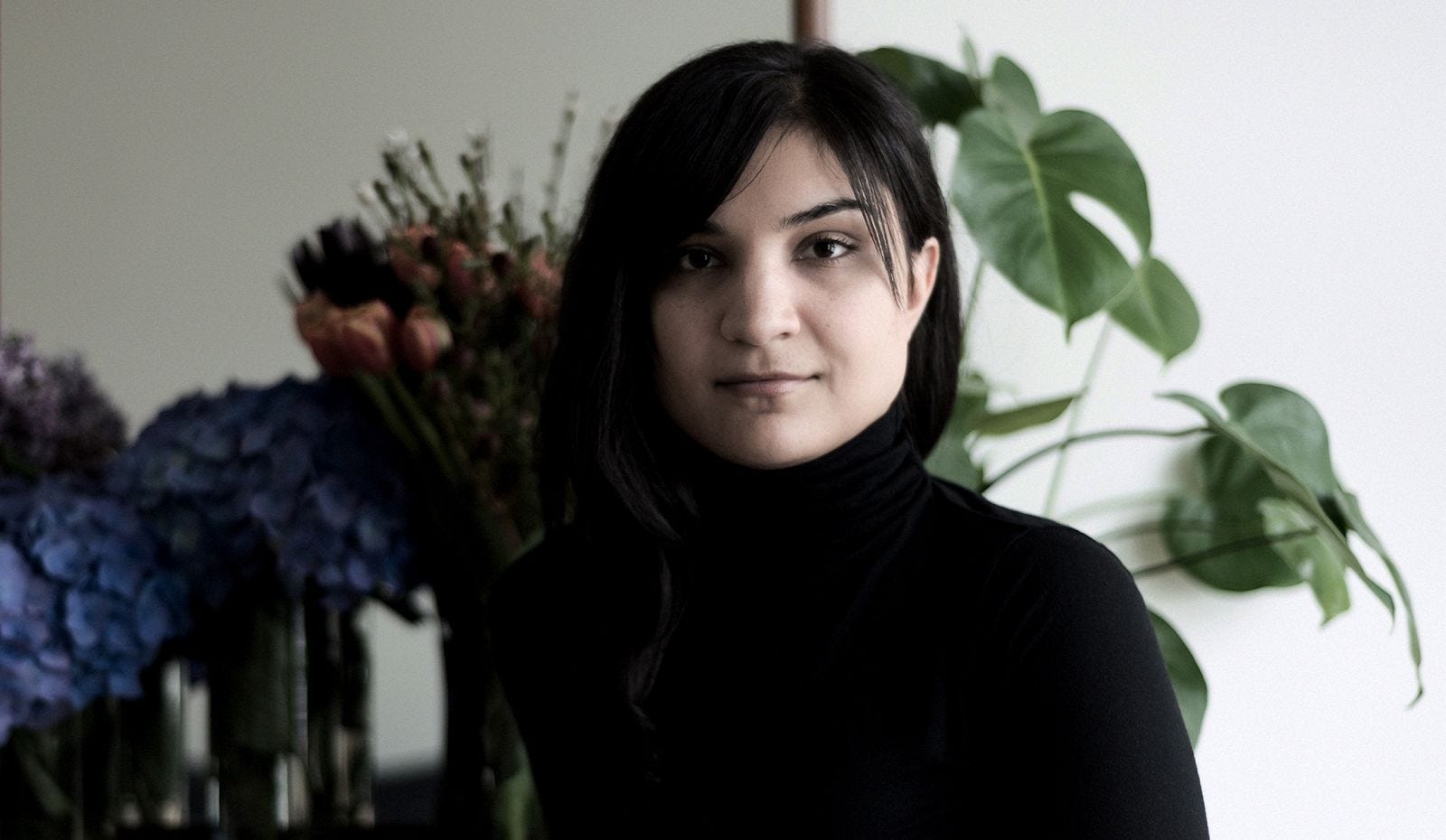
She elaborates on this in her recent New York Times profile
What interests me is comparing and contrasting how different instrumentation (including human voice as instrument) produce markedly different effects using similar long-form braided drone textures. The 'polyphonic for strings' brings dissonance forward while the human voice creates a harmonious scarf or ribbon of glowing and flowing sound.
Great to read this. I’ve avidly soaked up everything by Sarah Davachi since discovering her Cantus, Descant album. I find her music has a sacred quality and I find it demanding and rewarding in equal measures. She’s amazing.