

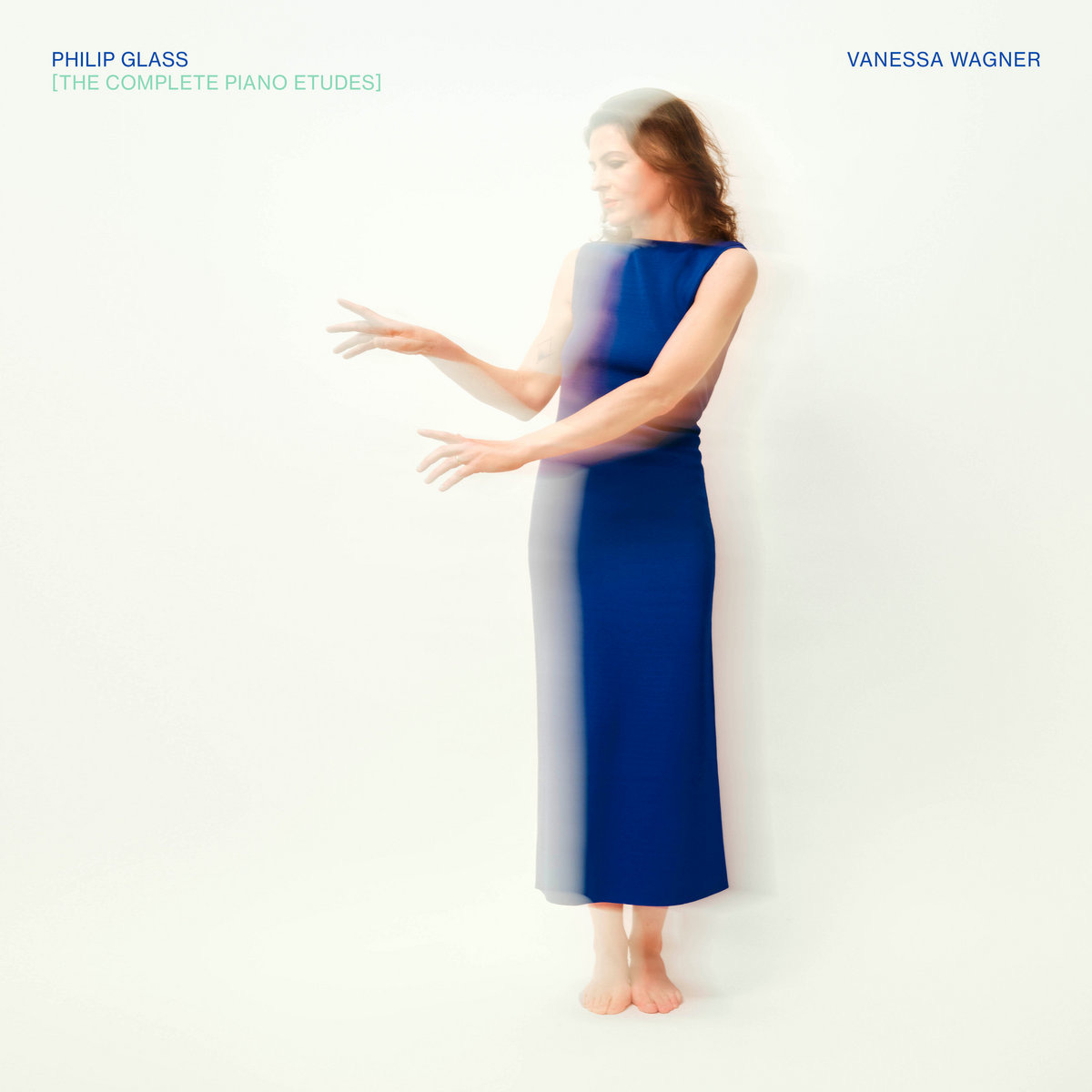
Today we’re listening to Vanessa Wagner, a French classical pianist. We’ve recommended her music three times before. She began playing piano “by chance,” she told us, “when my great-grandmother’s piano arrived at my home. I had no idea I would make a career out of it.” She studied at the Conservatoire de Paris, and several of her records focus on minimalist composers such as Philip Glass and Moondog. Her latest LP, Philip Glass: The Complete Piano Etudes, continues this trend. She plays all twenty etudes with agility and feeling. We’re also re-upping her 2022 record, Mirrored, which features the usual minimalism suspects as well as Ryuichi Sakamoto and Camille Pépin. A brief conversation with Vanessa follows the streaming links.
Philip Glass: The Complete Piano Etudes - Vanessa Wagner (131m, no vocals)
Spotify / Apple Music / YouTube Music / Amazon Music / Bandcamp / Tidal
Mirrored - Vanessa Wagner (40m, no vocals)
Spotify / Apple Music / YouTube Music / Amazon Music / Bandcamp / Tidal
What’s your earliest memory of music?
The Keith Jarrett concert in Köln that my father used to play on repeat on the vinyl record player.
How did you get started with the piano? What were the first pieces you loved playing?
I started by chance when my great-grandmother’s piano arrived at my home. I had no idea I would make a career out of it. It felt very natural, I was talented, and there was no pressure as my parents didn’t have ambitions for me to become a musician. I played Mozart, Debussy, Bartók…
Tell us about your journey with Philip Glass’s music.
I started playing Glass’s music 10 years ago with Murcof for my project Statea, which combines acoustic piano and electronic processing. I then recorded three albums devoted to the “minimalist” repertoire, including some of Glass’s pieces, notably the Études. Performing these works in concert has always received incredible reactions. In France, I am almost the only classical pianist to champion this repertoire so extensively. It felt natural and important to give full space to this great cycle, which is why I decided to record the complete works.
We adore your interpretation of “Avril 14th” by Aphex Twin. Are there techniques or styles from outside classical music that you bring to your own performance?
I’ve been listening to electronic music since I was 20 and I have many influences outside classical music. I love ambient: Loscil, Tim Hecker, Maurizio, Abul Mogard, Ana Roxane, as well as Nils Frahm and Bing & Ruth. This hypnotic music, which works on long durations, resonances, and silences, revealed a very introspective and intimate dimension of music to me.
How do you discover new music these days? Any recent notable finds?
I’m always searching for new sounds. I use streaming platforms while trying to bypass some algorithms to avoid staying in a narrow circle. I read the press and blogs, and listen to recommendations from friends or other artists. I believe keeping a very open mind is key.
What are you working on next?
I would like to further develop collaborations with choreographers and visual artists. I will continue my collaboration with Murcof and keep exploring the piano repertoire.
Wonderful. Love the album cover. Thank you!