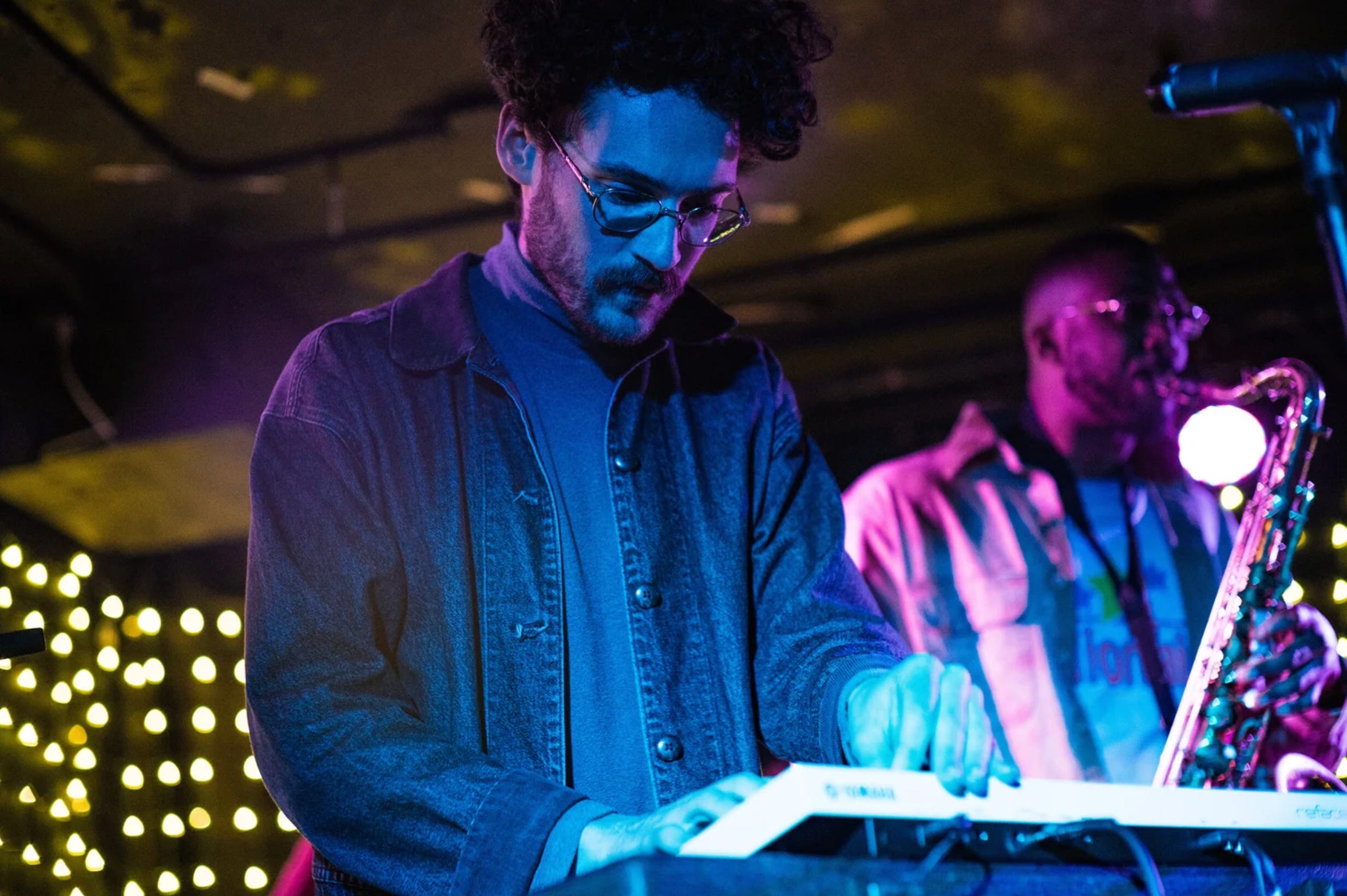
Today we’re listening to Resavoir, an American composer and trumpeter from Chicago. We’ve featured his music on plenty of mixes but never spotlighted his albums. Will Miller grew up playing trumpet and studied composition at the Oberlin Conservatory of Music. He’s recorded with artists like SZA, Mac Miller, Lil Wayne, and Whitney, and started the Resavoir project in 2018. As Resavoir, he writes a bunch of orchestral parts, records many fellow Chicagoan musicians, and then produces the tracks in a DAW. The result is a blend of lush soul and jazz pieces built over hip-hop templates. His latest record, Themes for Dreams, is mellower than previous ones – it’s almost an ambient album – and features artists like Marta Sofia Honer, Jeremiah Chiu, and Macie Stewart. His remarkable self-titled debut LP from 2019 earned rave reviews for his leadership of 18 musicians, their interesting improvisation, and the pieces’ artful composition. It’s a cinematic listen, reminiscent of the dramatic, intriguing ‘60s and ‘70s scores of Henry Mancini and the two Pieros (Piccioni, Umiliani). Track three features harpist Brandee Younger. A conversation with Will follows the streaming links.
Themes for Dreams - Resavoir (30m, no vocals)
Spotify / Apple Music / YouTube Music / Amazon Music / Bandcamp / Tidal
Resavoir - Resavoir (30m, vocal notes on tracks 1, 2, and 7; lyrics on track 8)
Spotify / Apple Music / YouTube Music / Amazon Music / Bandcamp / Tidal
What’s your earliest memory of music?
Really hard to say, but my grandpa Phil was an amazing classical pianist and we would hang and listen to classical music together, and he would play piano for me when I was really young. He definitely inspired me to want to learn how to play.
What were the early albums/artists that helped you find your sound?
In no particular order:
Ornette Coleman – The Shape of Jazz to Come
Flying Lotus – Cosmogramma
Radiohead – In Rainbows
Glenn Gould – Goldberg Variations
Keith Jarrett – Expectations
Kenny Dorham – Quiet Kenny
Freddie Hubbard – Straight Life
Dirty Dozen Brass Band – Medicated Magic
John Coltrane – My Favorite Things
What were your first recordings like? What did you use to make them?
I remember my friend Jonah gave me a Tascam 4-track cassette recorder and I messed around with that a little bit. I wish I could find that tape. I was probably a junior in high school. I’m sure it sounded like trash, but I remember having a single RadioShack mic and overdubbing myself playing trumpet and piano. When I think of recording myself, that’s the first thing that comes to mind. But I also remember being pretty stoked on the CD that my 8th grade band made where I had a big trumpet solo. I didn’t start taking recording myself seriously until college once I learned how to use Logic Pro. That changed everything. Up til that point it was mostly just Zoom H2 recordings of a live band, or super clean live band studio recordings.
Tell us the main things you learned at Oberlin Conservatory that you apply to the music you make these days.
My first composition assignment freshman year with Wendell Logan was to go to the Oberlin Reservoir and write a song with nothing but a handheld Zoom recorder. It’s a really challenging task. I had never tried writing this way, and rarely do even today. But I think the lesson was equally about hearing music in your mind rather than seeing it on a page, or finding it with your hands on your instrument, and about finding space from it all and clearing the mind. I was so blinded by my drive to conquer the trumpet that I didn’t really give myself the opportunity to just go to a nice park and sit still and listen to the natural environment and allow inspiration to come that way. Composition is such a fleeting, ethereal thing, much like inspiration.
With Themes for Dreams, how much of it was composed in advance and recorded with musicians live, versus things added in after recording sessions? How much of the album did you find in the edit, to take a phrase from filmmaking?
For this album, I had two rules: no drums, and no live band recordings. Many of the songs started out as most of my songs do – at the piano. Then I build on that until I can’t go any more. Then I edit it down, sit on it, think it over, let it rest for a few weeks / months / years, however long it takes to find the key to finishing the song.
Toward the end of the process, I wrote string parts and recorded strings on a handful of the songs. But “Tea” and “Time” started out as a live improvisation with William Corduroy that I then chopped up, and revisited with Corduroy almost a year later to record the guitar melody. “Leaves” started out as a synth loop that you can hear on the second half of the song. Irvin and Andrew came by the studio one day and I asked them to improvise a few takes over my synth loop and gave them some general direction for the mood. They jammed on it for a while, and then I took that jam and pared it down.
Tell us about one of your recording sessions for a hip-hop project that sticks out in your memory.
I recorded the horns on Mac Miller’s “Two Matches” in my living room using an Apogee USB mic in 2014.
How do you discover new music these days? Any recent notable finds?
I like going to record shops and digging, also listening to mixes / radio shows and going out to DJ sets. My friend Nik Arthur recently put me on to this amazing album by the Portuguese artists Carlos Maria Trindade and Nuno Canavarro called Mr. Wollogallu that’s really remarkable. I think getting recommendations from friends is my favorite way to discover music.
Name an underrated artist from the past 50 years.
Woo. Incredible music from the UK made by these two brothers in their home studio. They deserve wider recognition. [Ed. note: Great choice.]
What are you working on next?
Kind of a reaction to Themes for Dreams in the form of a largely electronic, sometimes ecstatic, beat-driven set. I really wanted to make an album that stemmed from live recordings/improvisations to reflect the chemistry of the live band, so that’s slated to come out later this year.