

Today we’re listening to Laurel Halo, an electronic musician and composer from Michigan now based in Los Angeles. She grew up playing piano, gravitating toward Romantic composers like Debussy and Ravel, and then got into electronic and leftfield music through the local Michigan scene. She’s been putting out solo music since the early 2010s, in which she blends her classically trained sensibility with inventive and experimental production techniques. Her 2023 LP, Atlas, is mostly ambient, and it ranked #1 on our best-of list for that year. Her latest album, Midnight Zone, is the score for Julian Charrière’s immersive film Midnight Zone, about the deep ocean and marine life. A conversation with Laurel (who’s performing in Berlin, London, Istanbul, and The Hague in April) follows the streaming links.
Midnight Zone - Laurel Halo (50m, no vocals)
Spotify / Apple Music / YouTube Music / Amazon Music / Bandcamp / Tidal
Atlas - Laurel Halo (40m, non-intrusive vocals)
Spotify / Apple Music / YouTube Music / Amazon Music / Bandcamp / Tidal
What’s your earliest memory of music?
Oh, good question, hard to say. According to my mom it was the community festival Dally in the Alley in Detroit’s Cass Corridor when I was three and I called it “nice mucus.” But I don’t remember who was playing. I do remember seeing Phantom of the Opera when I was five.
What were your first recordings like and how did you make them?
My first recordings were… humble. I took a couple composition courses in college, and processed the MIDI instrument rendering of whatever minimal-adjacent piano/violin pieces I had written through pedals.
What were the albums / artists that early on influenced your sound?
In the early days I was listening to a lot of classic electronica and dream pop from Warp and 4AD (Aphex Twin, Autechre, Broadcast, Cocteau Twins), but also Burial, plus a lot of local Michigan music like Detroit techno, electro, minimal, music on Ghostly. Tadd Mullinix was a hero at the time. I lived in a show house in Ann Arbor called Arborvitae for a time and was exposed to a lot of folk, noise, klezmer, Detroit techno… plus just a lot of weird or unclassifiable music, for lack of a better description.
I had a couple close music friends and we would try to out-weird each other with our selections at the freeform station WCBN we all had shows on. It was a strange mix, especially considering I also had a lot of classical music in my bones from the prior 15 years of classical music education. I was like many piano kids obsessed with playing the more romantic/post-Romantic/impressionist composers like Debussy, Ravel, Satie, Rachmaninoff, and Shostakovich.
What was your studio setup for Midnight Zone? What gear/instruments/software did you use to make the record?
The soundtrack for Midnight Zone started with a session at the Yamaha studios in Midtown NYC last March. I recorded long passages of ambient and drone with a TransAcoustic – an acoustic piano that can control an external synthesizer – and then amplify that synthesizer’s output through the body of the piano via transducers. The engineer set up a Montage M8X with the TransAcoustic, and we found some aquatic sounds and ran with them. The amazing part about playing with a TransAcoustic is how the body of the piano can shudder and rumble with certain synth patches, and create unexpected percussive or rattling moments within the recording.
After this initial session, I auditioned various synth sounds at home to pair with these live recordings, as well as recording many layers of violin and viola da gamba. The filmmaker Julian Charrière also provided a lot of ocean foley sounds – natural sonar, mechanical sonar, deep sea mining bursts and pulses… so those were also folded into the process. Generally the album is pretty sculpted, sound-designed electroacoustic slabs. The challenge was to not anthropomorphize the material or become overly wondrous, sentimental or foreboding, but find some pocket where the music remained tonally subtle but evocative.
How did the experience of scoring an art exhibition compare or contrast with making your solo works? What were the kinds of considerations you had to make for this particular composition given the environment in which people would experience it?
Composing is quite different than writing artist albums. Julian and I had a spotting session in early February last year, where we went through each section of the film, noting the exact moments where specific lifts or drops in energy should happen. For example, there is a climactic moment in the film where the underwater drone camera zooms out, and there’s this incredible shot of hundreds or thousands of fish all circling around this lighthouse lamp. But we only see the bottom of the lamp, so the light is similar to that of an eclipse. It’s the most powerful sequence in the film, and it required a very specific tone: achieving a state of transcendence without sentimentality or joy. It had to sound like an “Om” moment, without being too blissed out. Or another example is a sequence of tender shots of bioluminescent creatures – the music had to convey something delicate and alien, but not necessarily too alien. With solo artist albums, it’s very free, without the aesthetic limitations of composing except the ones you put on yourself. I have some guardrails/guidelines in place for the next one, and I’m getting to recording that next.
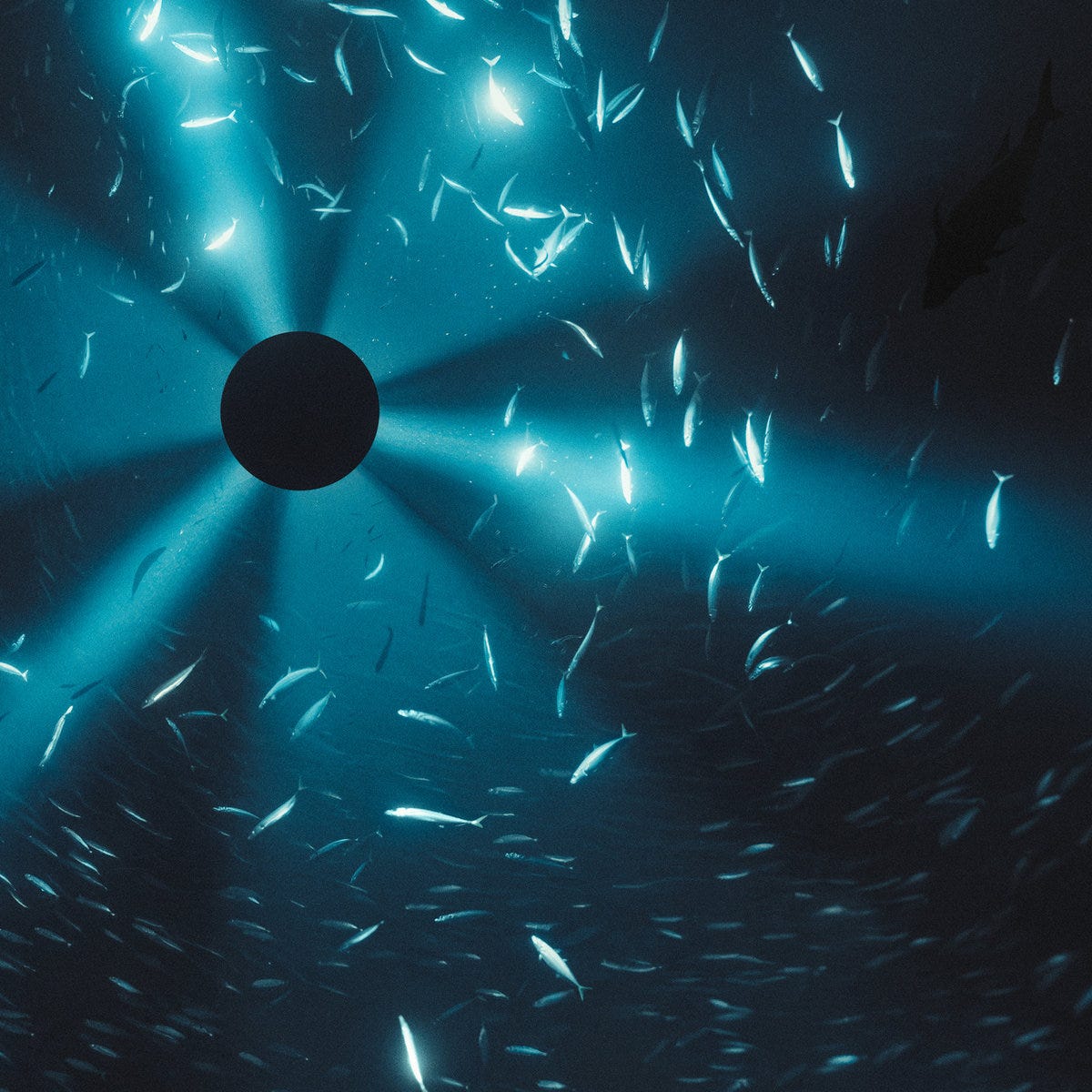
How do you discover music these days? Any notable recent finds?
I guess it’s a mix of personal recommendations, YouTube, NTS, and online retailers like Boomkat or Bandcamp. I like texting friends I haven’t heard from in a while and just asking them what they’re listening to. More often than not you get some cool recommendations that way. On YouTube I have specific channels I’m subscribed to, and it’s often easier to find very niche music there that wouldn’t be uploaded to DSPs, or live performances. I love how with NTS it’s easy to find and save the tracks you like – it’s a great discovery tool. Boomkat have their signature Manchester-dapped reviews that are often so spot on. Bandcamp is great as it’s easy to browse label catalogs – labels that I often discover through all of the above, and so on… Right now I’m obsessed with this acoustic guitar Autechre covers album by this artist called Autechre Guitar by Shane Parish, I found that through Boomkat… [Ed: Featured in Flow State a couple weeks ago.]
Name an underrated artist from the past 50 years.
My dad! He’s an amazing painter. He does amazing landscapes of industrial sites in Detroit as well as nature settings. When he was younger, he made quite psychedelic work. The cover of Chance of Rain was a drawing of his from his youth.
What are you working on next?
I have an acoustic upright waiting for me to come home from tour to write the next record with.
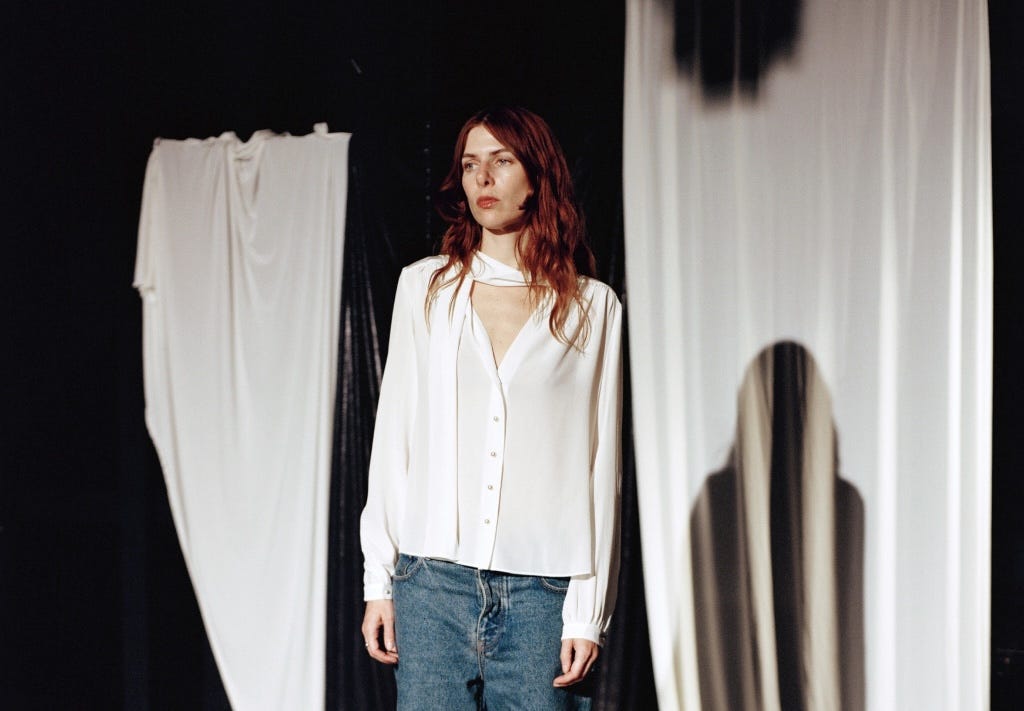
Laurel Halo is one of those artists who keeps pushing the boundaries of what electronic music can be. The move from more club-oriented material to the Midnight Zone score shows how far her compositional range stretches. Looking forward to catching one of the upcoming shows.
As if compressing drone, ambient, electronic and shoegaze into one cavernous, resonant space - that's the first five minutes of 'Sunlight Zone'. Sun's not out yet, perhaps I have to wait, but loving the textures. Halo is building space with sound, large, vaulted, but also oceanic. There may be sun glinting on the ocean beyond the cave.