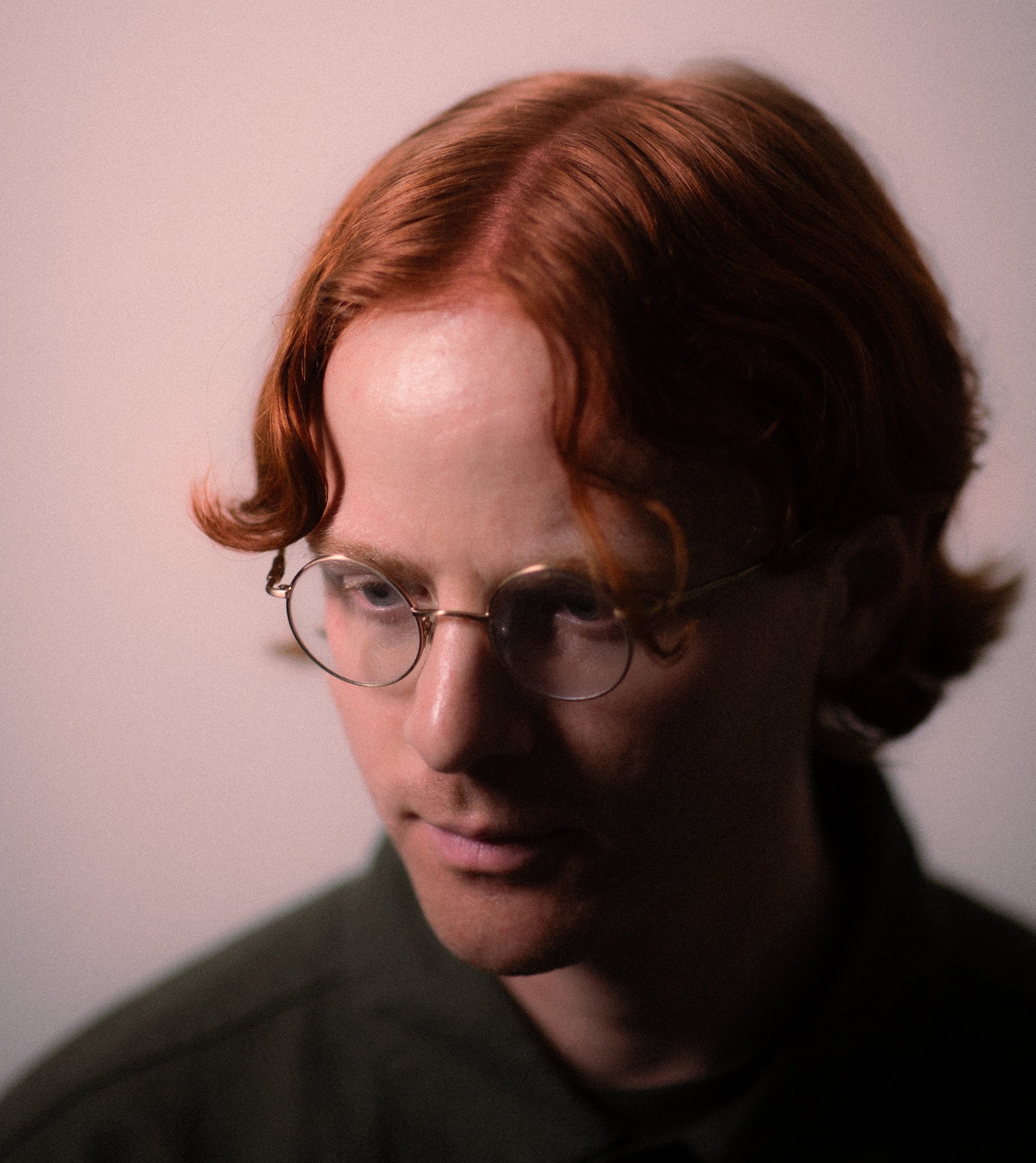
It’s Friday so we’re listening to something more upbeat. Today we’re listening to Ess Whiteley, an American composer and multi-instrumentalist based in San Diego. They grew up playing piano and began composing music at age 13, going on to major in classical composition while playing in “high-energy, Midwest-emo-inspired” bands. They’re now pursuing a PhD in Composition at UC San Diego, channeling a wide range of influences: Susumu Yokota, Oneohtrix Point Never, Chet Baker, Brahms, Sibelius... Whiteley’s debut LP, Mycorrhizal Music, came out in November. The pieces are ecstatic and minimalist in the Glass/Reich sense and take inspiration from “mycelium networks, rhizomatic structures, and other unseen systems that sustain life.”1 We’re pairing it with an album they cited as an early influence: Steve Roach’s Structures from Silence. A conversation with Ess follows the streaming links.
Mycorrhizal Music - Ess Whiteley (42m, no vocals)
Spotify / Apple Music / YouTube Music / Amazon Music / Bandcamp / Tidal
Structures from Silence - Steve Roach (59m, no vocals)
Spotify / Apple Music / YouTube Music / Amazon Music / Bandcamp / Tidal
What’s your earliest memory of music?
One of my earliest memories, actually in general, is deeply tied to music. I must have been not much older than 4 or 5, and my mother and I were dancing to “Something to Talk About” by Bonnie Raitt in our living room. All I remember is being consumed by a deep sense of selfless abandon, wiggling my tiny body to the music, full of joy and a feeling of aliveness. It’s a wholesome memory and was a formative moment!
When did you start making your own music? What were your first recordings like?
I must have been 8 or 9 years old when my piano teacher told me to compose something as an exercise for learning my key signatures. From that moment, I became increasingly obsessed with making my own music and increasingly resistant to reading or playing the sheet music of others on the piano. When I was around 13, I started playing in a band with friends and became obsessed with collecting and learning new instruments, including trumpet, accordion, pedal steel guitar, banjo, electric bass, electric guitar, electric drum set, and synthesizers. I was in love with all of them.
Throughout my teen years, my musical interests were always eclectic and heterogeneous. Having grown up in a New Jersey town in close proximity to New York City, I was regularly exposed to all ends of the musical spectrum. The resultant recordings I made, inspired by the music I was listening to and the instruments I had, flowed between genres like punk, folk, indie, jazz, post-rock, minimalist and neo-Romantic classical, and later math rock. When I got to college shortly after turning 18, I majored in classical composition while simultaneously fronting a two-piece math rock band on guitar called Head Honcho. Later, I joined another band called Gulfer. Those early math rock recordings were high-energy, Midwest-emo-inspired, tapping-heavy, cathartic, and angsty. In my early classical compositions, I was experimenting with all kinds of aesthetics, from minimalism to serialism to experimental electroacoustic and avant-garde electronic.
I never felt like I needed to pledge allegiance to a musical idiom, or even an instrument. I loved, and wanted to explore, all of it.
What artists/albums were early influences on your own musical style?
Some early influential records from years ago that remain super important to me are Roberto Musci’s Tower of Silence, Susumu Yokota’s Symbol, Steve Roach’s Structures from Silence, Ashra’s New Age of Earth, Chet Baker’s Chet Baker Sings, Sufjan Stevens’s Illinois, and Oneohtrix Point Never’s R Plus Seven.
Tell us about the music you’ve been studying/listening to most intensely while at UCSD.
The composers I’ve been most fascinated by and studying closely are Simon Steen-Andersen, Steven Kazuo Takasugi, Jennifer Walshe, and Michelle Lou. Others I’ve been listening to a lot but not necessarily studying as closely are Steve Lehman, Anthony Braxton, Henry Threadgill, as well as a lot of Brahms and Sibelius symphonies, Liszt and Schubert piano music, and Hildegard von Bingen’s sacred choral music.
What instruments/gear/software did you use to make Mycorrhizal Music?
The live instruments I tracked were grand piano, trumpet, violin, and voice, as well as hardware synths like a vintage 1970s Minimoog, Moog Grandmother, Yamaha DX7 Reface, and a Chase Bliss Onward dynamic sampler pedal, a modular system made up mostly of Make Noise, Intellijel, and Mutable Instruments modules, and Ableton running Kontakt and a ton of different Max for Live plug-ins and VSTs.
How do you discover new music these days? Any notable recent finds?
Online radios like NTS, Dublab, and N10.as, following record labels and venues whose curation I like, friends sending me playlists and albums, and going to local experimental, electronic, and new-music concerts.
Two albums that came out in 2025 that I’ve been loving are a gorgeous Scottish bagpipe record by Brìghde Chaimbeul called Sunwise, and an incredible, wonky, experimental jazz record called The New Awkward by Johnny Richards and Dave King.
Name an underrated artist from the past 50 years.
Freak Heat Waves
What are you working on next?
A sound art installation that uses speaker cones, transducers, and lights for a gallery in Barrio Logan, San Diego.