

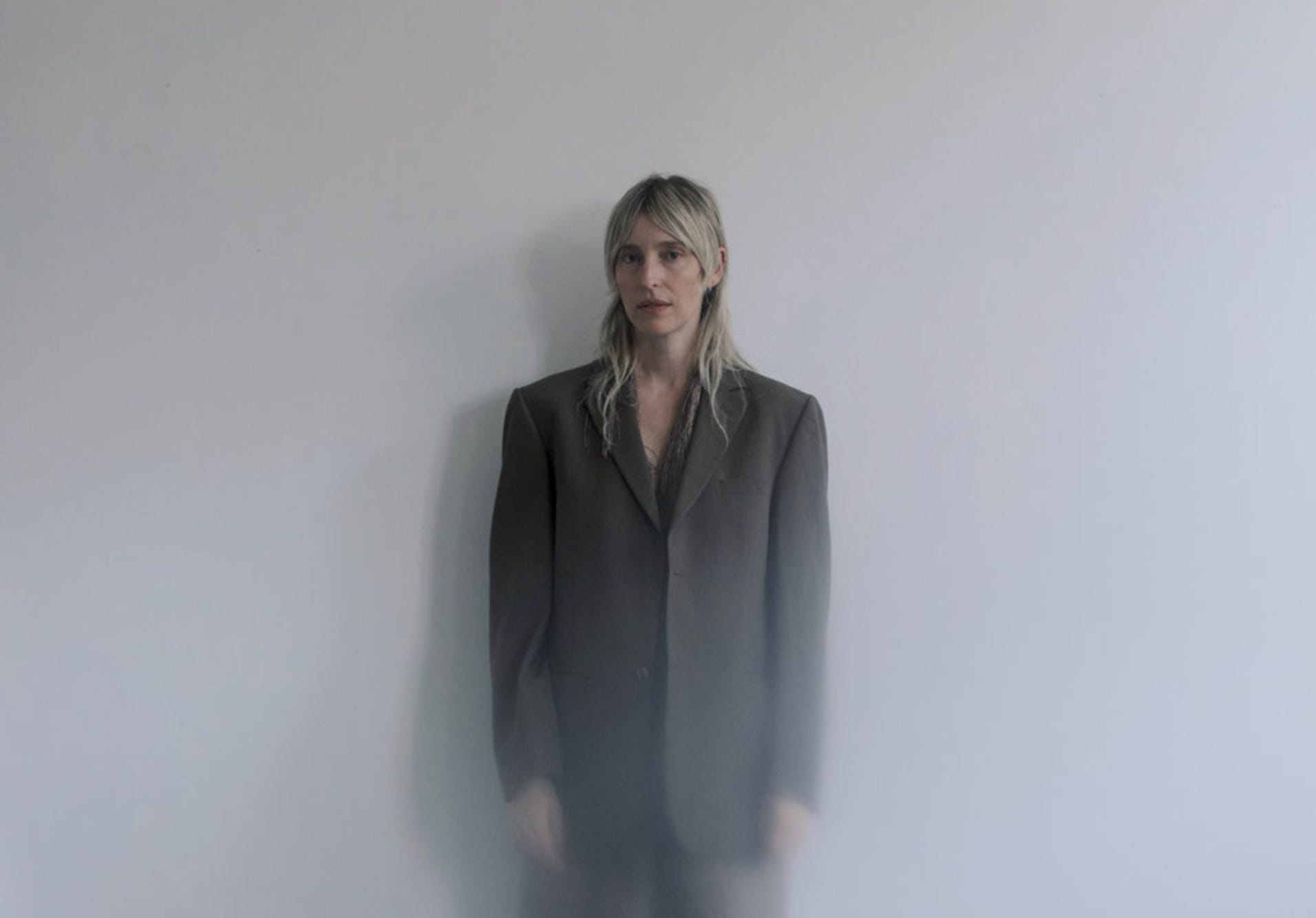
It’s Friday so we’re listening to something slightly more upbeat. Today we’re listening to Carmen Villain, a Mexican-Norwegian musician originally from Michigan. We previously recommended her music in 2021. She grew up in Oslo, where she’s now based. She began making music in the mid-2000s, starting with guitar-driven songs, and later pivoting to pure electronic music. The latter was influenced, she told us, by “a lot of ECM, cosmic free jazz such as Pharoah Sanders (Karma), Alice Coltrane (Journey to Satchidananda), Don Cherry (Brown Rice etc), Rhythm & Sound, Biosphere (Cirque), Moondog.” Her new album, Memoria, just came out today. Taking a page from Pauline Oliveros’s Quantum Listening, she practiced active listening while producing the record but also the active recollection of sounds: “I had never actively done that before, and sure enough I could hear a sound from my past by thinking of it.” We’re also playing Both Lines Will Be Blue from 2019, a series of “dubby ambient-jams,” in her words. A conversation with Carmen follows the streaming links.
Memoria - Carmen Villain (35m, basically no vocals)
Bandcamp / Spotify / Apple Music / YouTube Music / Amazon Music / Tidal
Both Lines Will Be Blue - Carmen Villain (40m, no vocals)
Spotify / Apple Music / YouTube Music / Amazon Music / Bandcamp / Tidal
What’s your earliest memory of music?
I remember being completely obsessed with this classical music CD box set that my parents had, I’d put it on and dance around the living room, I must have been around 6 or 7? It included the sort of greatest hits, Vivaldi, Debussy, Mozart, Bach… but what really stuck with me was Ravel’s Bolero.
When did you start making music? What were your first recordings like?
I started making and recording music in my mid 20s. The recordings were very simple; songs, usually some loops made out of midi drums, guitars or samples, processed in a very simple way, reverbs, echoes, guitar pedals, etc.
You shifted from guitar-led songwriting to more ambient/electronic music – tell us about the creative impulses that led to that shift, and the artists/albums that helped you find that new direction for your sound.
I was very interested in the instrumental part of the production already from the start, I’d spend a lot of time on the details and the atmospherics of the tracks. My early albums had several purely instrumental tracks on them. When I started working on Both Lines Will Be Blue (my first fully instrumental album), it just felt more effortless, interesting and enjoyable to move my focus to only the instrumentals, It just felt like a natural transition to me. At the time I was listening to a lot of ECM, cosmic free jazz such as Pharoah Sanders (Karma), Alice Coltrane (Journey to Satchidananda), Don Cherry (Brown Rice etc), Rhythm & Sound, Biosphere (Cirque), Moondog..
What was your studio setup for Memoria? What instruments/gear/software did you use to make the record?
I started the whole process by booking in a day at Rainbow Studios in Oslo, and invited Johanna Orellana (flutes) and Eivind Lønning (trumpet) to just improvise various different takes, some based off prompts I would give them, others where they just did what they felt like. I also recorded some clarinet stuff there. I then took this new, great sample bank and started using that material along with other new and archival sound recordings in different ways in my own studio. I work in Ableton, and mostly used a variety of VSTs for programming and processing, a GR-1 and a couple of outboard pedals. The strings were recorded at André Bratten’s studio during our final touches on the mix.
The new record is thematically about memory, specifically “sound as memory.” Tell us about your relationship to that idea and specifically what inspiration you took from Oliveros.
I’ve been fascinated by memory and our perceptions of time for quite a while. They are just some of life’s big mysteries that I don’t think we’ll fully understand, but are what gives us a sense of meaning of who we are. I first read Pauline Oliveros’ Quantum Listening late spring of ‘25, and I felt she put many things related to sound I’d only abstractly thought about into such considered and beautiful words. As a musician, I had been aware of the practice of active listening as an essential part of my practice, be it while working in the studio, playing with others or hearing and recording a sound somewhere. What really stood out to me was how she encourages the reader to engage in active experiments, one that stood out to me was a prompt to try to remember a sound from your past. I had never actively done that before, and sure enough I could hear a sound from my past by thinking of it. I think on a whole, active listening can encourage a deeper curiosity and and connection with both ourselves and our surroundings, and that way unlock more empathy.
How do you discover new music these days? Any notable finds recently?
It’s mostly through friends recommendations, listening to NTS and other mixes by people I admire, Boomkat, Bandcamp. I also regularly check out the catalogue of labels that I like. I was listening to some of Eivind Lønning’s earlier collaborative records, and came across the Streifenjunko album Like Driving from 2018, its great.
Name an underrated artist from the past 50 years.
Johanna Orellana
What are you working on next?
Next up is playing shows, so I’ll be preparing for a couple of different iterations for that. I’m looking forward to do music for film, and also looking to do more music for stage and installation.
Big fan of Carmen...so much to hear within her catalogue. Looking forward to listening to new album and hope one day to get her to Shrewsbury, UK!!