

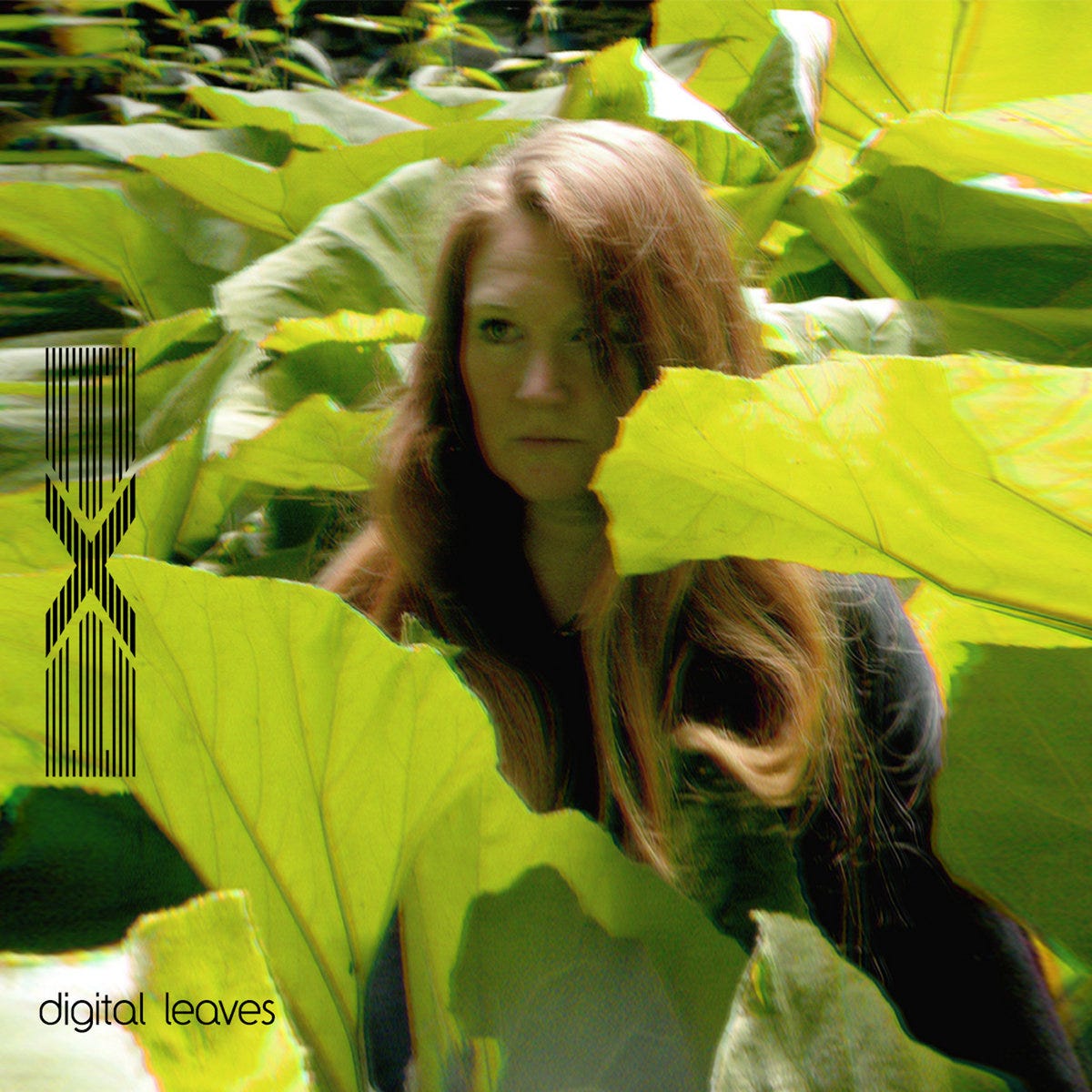
Today we’re listening to Annie Gardiner, a Scottish-Italian musician based in Bristol. She was raised in South Wales by two musicians and began recording music on a reel-to-reel tape machine in her childhood bedroom. As a teenager she got into grunge and club music, and later Warp Records and noise. She’s put out several albums of folk and pop music – under her own name and her moniker Excellent Birds – but her latest release, Digital Leaves, is a three-track ambient LP. “Ambient music has formed the majority of my listening since I lost my Dad in 2022,” she told us. “I found most music too much to take in for a long time after that.” She made Digital Leaves using a Yamaha DX7, field recordings, and effects plugins, which she manipulated live over the course the 10-20 minute tracks. She’s at work on more ambient music, but Digital Leaves is so far her only ambient record, so we’re pairing it with the one that most influenced it: Surround by Hiroshi Yoshimura. A conversation with Annie follows the streaming links.
Digital Leaves - Excellent Birds (43m, no vocals)
Spotify / Apple Music / YouTube Music / Amazon Music / Bandcamp / Tidal
Surround - Hiroshi Yoshimura (40m, no vocals)
Spotify / Apple Music / YouTube Music / Amazon Music / Bandcamp / Tidal
What's your earliest memory of music?
My earliest memory of music is responding to the sound of my mum vacuuming. I identify this as a musical memory because of the physical feeling I remember from it… I remember copying the drone of the vacuum cleaner with my voice as a very small child, maybe 3 or 4, hearing the beating of my note against the drone and looking forward to doing it again!
Where'd you grow up?
I was born in Carmarthen, South Wales to Scottish-Italian parents. My parents had been on tour (they are/were both musicians) and had given up their London home in the interim, so they moved into a friend’s house just outside Llandeilo (a small town 15 miles from Carmarthen) as a getaway. They loved the countryside so much they stayed. I live in Bristol, England now though.
When did you first record your own music? What were those first recordings like?
When I was a teenager, my Dad leant me a TEAC reel-to-reel tape machine and a small console and set it up in my bedroom, showed me how to use it all so I could record sound and songs or whatever. I experimented with recording my bass, voice, and other sounds. I also made a radio play from Tank Girl comics… It was so weird having that equipment as a teenage girl in Llandeilo. My friends could not relate at all, and it made me feel like such an outsider, so I got shy about it, but also I had such a full on desire to make and respond to sound.
When I got to university at Bath School of Art and Design, I took a degree in Fine Art (Sound and Image), and I started getting really into it. I recorded pieces using only field recordings. I was trying to create beats from recordings I’d taken from the lunchtime canteen using a digital dictaphone (Olympus, I think), which everyone uses now (this was early 2000s) and then cut and pasting into Logic Audio as it was then. I was amazed by the sound quality and the fun I had doing it, how listening to things on repeat could become beings of great music. I fell in love with that experimentation.
I also did a lot of writing and recording on cassette four-track, mini-disc, and laptop mics with my good friend Anthony Barratt who is in Je Suis Animal in Norway and makes amazing visuals with Moon Relay. We made a lot of recordings together and shared a flat where it just became a studio for a short while. The sound was lo-fi indie band circa 2002: guitars, vocals, bass, guitar fx skronk – a lot of fun.
Who were the artists that early on points you in your own musical direction?
Grunge and Rave (IDM, EDM, Techno, Trance, DnB, Hard Step) were the two biggest influences in my teen years. Deep Wales was huge on the Free Party thing but getting bands to play rural country shows didn’t happen in the ‘90s.
I basically went to raves and danced all night but listened to Sonic Youth, Blur, Nirvana, PJ Harvey, Portishead by day. That listening started getting more electronic via Orbital, Squarepusher, Polygon Window, Aphex Twin – all discovered from going to free parties where the chill tent would always be playing something experimental away from the Techno…
I got into live music when I was at university, particularly experimental bands, noise stuff like Lightning Bolt… Then I got more into very quiet dark acoustic stuff like Lankum, Jessica Kenney, sort of inverting the noise, the weighty heavy quiet which I love exploring with my solo stuff.
So your last album was a pop album, Jungian Stomp. First of all tell us about your relationship with Jung.
Jungian Stomp was a sort of playful title. I liked the idea that human beings do this dance with Jung’s archetypes in the realms of consciousness and unconsciousness and that is reflected in some of the lyrics and the mix of synthesised sounds and field recordings on the record.
Jung is obviously a big presence in the field of psychology, the thinking about how we relate, how our minds work. I find his work on dreams interesting – archetypes and symbolism and so on. There are some interesting thinkers that pick up from Jung like Marion Woodman as her Transformation ideas challenge some of the patriarchal ideas of Psychoanalysis, and Clarissa Pinkola Estes too whose book Women Run with the Wolves influenced the lyrical ideas on the record too.
Tell us about the shift from a pop album to a pure ambient record. What experiences led you to this pivot?
Yea, that feels like a significant step for me as a musical person as well as how it reads release wise. Ambient music has formed the majority of my listening since I lost my Dad in 2022. I found most music too much to take in for a long time after that. I discovered Hiroshi Yoshimura from listening to Harold Budd so much on YouTube. I fell completely in love with Surround: Soundscape 1. It’s probably the record I have listened to most in a really long time. Then Music for 9 Postcards too. I love its generosity to the listener, its joy without losing melancholy, and it feels like such a heartfelt record to me. It isn’t about process at all but a kind of being in a space. Reading about Yoshimura’s interest in sounding the air, or getting as close to the air as much he could through sound was really inspiring, describes what I like about cassette noise or a noisy jack lead. Eventually, this interest made its way into my writing.
For Digital Leaves, what did you use to make the record – gear, instruments, software, etc.?
I used an original Yamaha DX7 to form the basis of all the tracks. Each track started with a sound and then recording a 20-minute improvisation into Logic. I wanted to challenge myself with more longform writing by sounding any ideas very slowly with this iconic sounding synth.
I used Logic’s reverb Chromaverb to create extra drones using the Freeze button in the delay modulation panel. I made up many drones from the synth by putting them through the freeze, bouncing them as stems, layering adding more reverb. I called them Chroma swatches, like echo colours or something.
There are field recordings on “Lotus” too, made using my iPhone, which were cut up into tiny interesting bits and then sort of scattered and edited until they felt like they were in the right place. I really love lo-fi recordings because of the grain that comes with them.
To get the movement or reverbs and the stereo field, I was trying to apply the method of sequence that Daniel Lanois and Brian Eno used on Thursday Afternoon, where the composition is led by the faders on the desk. I was thinking I could try that with latch automation using my mouse – the controller I have is only a keyboard not a console one. This gave me a feeling of live mixing even though it was with reverbs and panning. I really like the fast granular sounding bit on “Lotus.” That is where the latch automation glitched to flick really quickly.
How do you discover new music these days? Any recent notable discoveries?
Newsletters like yours – I discovered Benoit Pioulard from Flow State and love Stanza IV – podcasts, YouTube playlists, also my partner, MXLX, is a prolific artist with a huge record collection and I’ve found a lot of treasure through him – Jessica Kenney for one. The wonderful community of experimental musicians in Bristol, Cassette labels like Liquid Library who put on shows at Cube Cinema all the time – there’s some great ambient music on that label. Zero Gravity Tea Party, Carnivorous Plants, and then improv from Jo Kelly or Dan Johnson. So much good stuff.
Name an underrated artist from the past 50 years.
I think Hiroshi Yoshimura for sure. He is known in the ambient community of course, and I know he wasn’t a producer or as big an artist as Eno is for example, but I think the beauty, heart and generosity of his work is so vital and unique to him. It is accessible too; you can enjoy it without needing to know or understand anything.
What are you working on next?
Currently, I am about to go into the studio to record a new collection of acoustic drone, ambient ish pieces, written for double bass and voice, no lyrics, just sounds. It’s called TONES. This record will be a solo record (as Annie Gardiner) rather than a project name.
Also, I have started several new ambient records and am very much working with them on rotation at the moment. I definitely have the bug for ambient now. Making Digital Leaves was one of my favourite music making experiences so far. Ambient music has got so much in it about listening deeper, responding slower, listening to the between states. It’s as much about what isn’t there as what is and feels so beautiful to travel within it.
Listening to Annie Gardiner's music, I felt refreshed.
been loving her recent EP, lovely to learn more about her here!