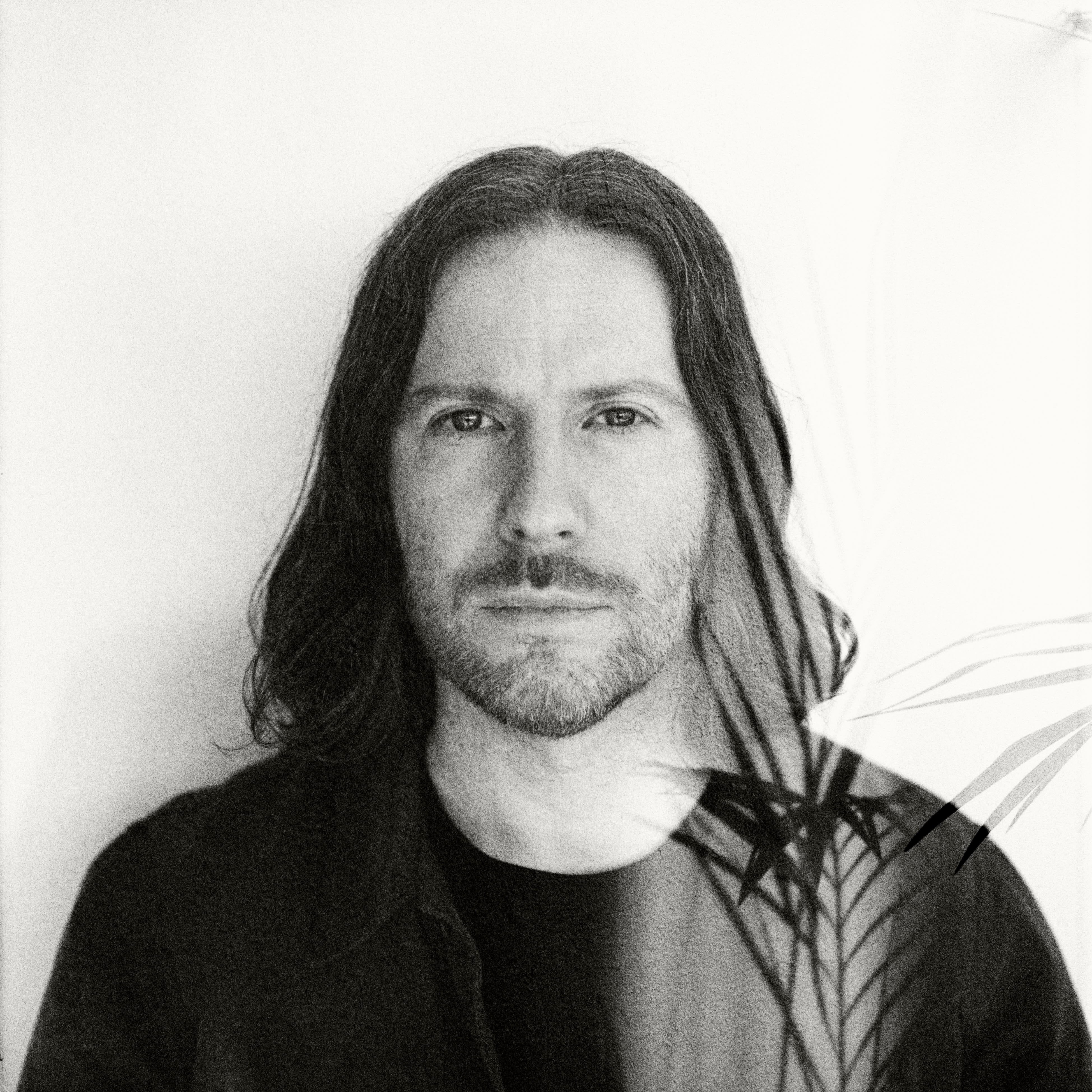
It’s Friday so we’re listening to something more upbeat. Today we’re listening to Rival Consoles, an electronic music project from UK producer Ryan Lee West. He started a rock band as a teenager and later tried his hand at Cubase, which along with Warp Records’ music pointed him in the direction of electronic music. He’s been putting out records since the mid-2000s. His new LP, Landscapes from Memory, has all the trappings of club music, but the intricacies of its composition demand headphone listening. “One thing I have evolved towards is a more minimal aesthetic and in recent years one which goes against dance music,” he told us, “despite elements of my work containing dance music techniques.” We’re also playing his 2016 record, Night Melody, whose syncopated synths express rhythm as much as the drums. A conversation with Ryan follows the streaming links.
Landscape from Memory - Rival Consoles (58m, no vocals)
Spotify / Apple Music / YouTube Music / Amazon Music / Bandcamp / Tidal
Night Melody - Rival Consoles (34m, no vocals)
Spotify / Apple Music / YouTube Music / Amazon Music / Bandcamp / Tidal
What's your earliest memory of music?
Hmm, I’m not 100% certain but my mum and dad played the Beatles all the time when I was a child. I was also obsessed with films when I was very young and the music was a big part of that feeling for me, I was incredibly excited by the Morricone/Leone westerns when I was very young. Especially The Good, The Bad and The Ugly and Once Upon a Time in the West!
When did you start recording your own music? What were your early recordings like, and what gear/software did you use?
I started a band when I was 12-15 and I would record using a cassette tape recorder using the built-in microphone to demo ideas (this was a cheap consumer radio, not intended for recordings really). I would even take this to band practise to record my band and remember how much I hated that it didn’t sound like the sound in the room.
I didn’t know about treating sound or production at all for a long time, but I knew to place the microphone at a certain distance between drums and guitars for it to sound balanced which was the start.
Many years later I used versions of Cubase with zero knowledge (this was pre YouTube). I was very lost and confused for years using software but it was also exciting making sounds and trying to compose. The first synth I got was the microkorg (a common thing to acquire then because it was cheap). To this day I think that synth is actually very musical and interesting.
Who were the artists that pointed you early on in your musical direction?
As I grew up listening to a lot of bands I would say Radiohead, Deftones, Trail of Dead, Sigur Ros, etc were a big influence on me to begin with but perhaps the biggest influence on my electronic music was when I discovered Warp Records.
Aphex Twin, Clark, Autechre, and Squarepusher were so inspiring because they constantly showed me things I had never heard before, both sounds and structure.
I also studied great conceptual composers like Laurie Anderson, Meredith Monk, Pauline Oliveros, Denis Smalley, etc.
Which also excited a part of my brain I didn’t know I had and I think encouraged the analytical part of my artistic mind.
Tell us about how you've evolved your sound from the 2000s to today.
I have explored a lot of things over the years, from the very dark/heavy to extremely light and playful.
I think one thing I have evolved towards is a more minimal aesthetic and in recent years one which goes against dance music, despite elements of my work containing dance music techniques.
I think early on I was very crude and there is a lot more maturity in my decisions now, but I also am not a perfectionist so I always keep things quite rough.
I am always interested in the unknowns of electronic music and how it can make us feel/think. I feel I am always multifaceted as an artist because I am interested in too many things and electronic music encourages experimentation.
What was your studio setup for Landscape from Memory?
Lots of recordings of cheap Gretsch guitars, Rev2 synths into Chroma Console, Oto Bam, analogue heat mkII, memory boy delays, space echos.
Gretsch drums recorded with a selection of microphones like Neumann TLM102 and the Coles Ribbon
Soma pulsar 23 (drum machine) - for clicky textures
808 (mainly for claps)
Nagra 4.2 mono tape loops/ recording - for lofi hazey pads.
Moog Matriarch (soft gradient beckons)
I made a lot of music sketching structures with sounds I had previously recorded, almost like film editing and slowly creating a sense of narrative flow from individual parts.
plugins: repro5, massive, landforms, reaktor, byome FX, salty grain, valhalla plate, soundtoys delays, arturia jupiter.
Name an underrated artist from the past 50 years.
That’s a tricky question. Part of me wants to say Autechre – because even though they are known and well regarded, the uniqueness and consistent exploration of sound by them over the decades is enormous, and they have always gone a path that is very outside of trends. Instead of conforming to known forms and style they exhibit pure imagination.
What are you working on next?
I’m currently scoring music to a documentary about scientific phenomena.