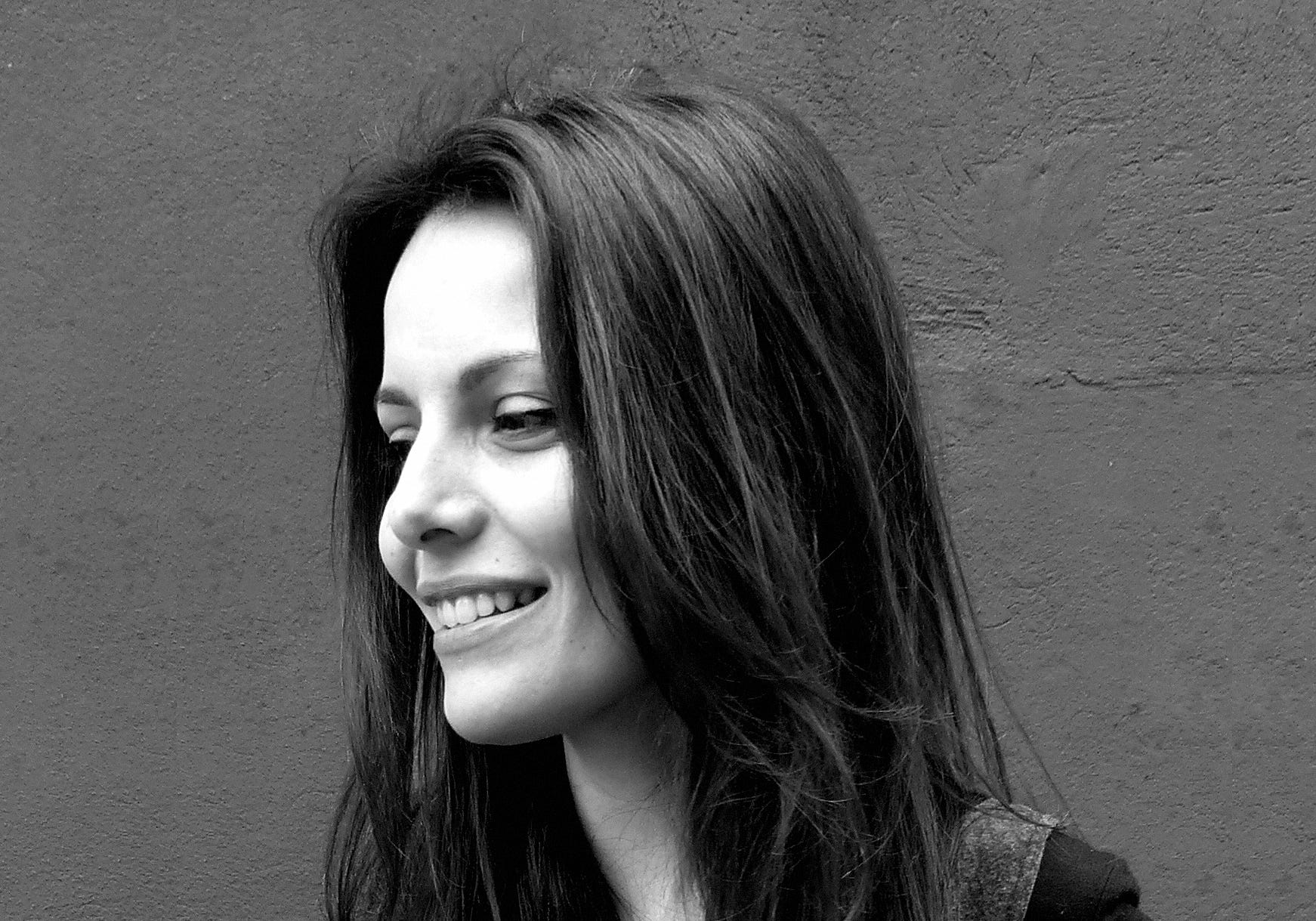
Today we’re listening to Francesca Marongiu, an Italian electronic musician and composer based in Tuscany. She grew up in Rome, studied piano and guitar, and then got into synths and digital production via her hometown’s underground music scene. Her new solo record, Still Forms In Air, came out in August; it’s the first record she’s released under her own name. It’s four longform electronic compositions inspired by ‘80s Japanese environmental music, including works by Hiroshi Yoshimura and Satoshi Ashikawa. We’re pairing Still Forms with Yoshimura’s 1986 LP, GREEN, which she cites as a major influence. A conversation with Francesca follows the streaming links.
Still Forms In Air - Francesca Marongiu (41m, no vocals)
Spotify / Apple Music / YouTube Music / Amazon Music / Bandcamp / Tidal
GREEN - Hiroshi Yoshimura (43m, no vocals)
Spotify / Apple Music / YouTube Music / Amazon Music / Bandcamp / Tidal
What’s your earliest memory of music?
That’s a tough one. Maybe one of my earliest memories is of hearing accordions in the distance during a late spring street festival in the Roman neighborhood where I grew up. We had a big terrace with a swing, and I remember sitting there, rocking back and forth while listening, with the cheerful murmur of voices rising from below. That feeling might have been my very first idea of a “mix,” in its innocent way.
Then, probably sacred music – I come from quite a religious family, and we used to attend a Catholic congregation just outside Rome, where spiritual retreats were often held. So I’ve been listening to and singing sacred music since I was very little (thankfully, that experience also led me to develop a more personal – and rather less orthodox – sense of spirituality).
And finally, some Genesis or Morricone record due to my father’s passion for good music.
How did you start making music?
Somewhere between middle school and high school, I studied piano and guitar, but after a while I gave it up because those years were pretty chaotic. Toward the end of high school, I got really into Sonic Youth. I knew all their songs by heart, and I was desperate to play them myself. So I bought a cheap guitar and fooled around for a while. Around the same time, I got really into shoegaze, then Kranky, minimal music, and eventually discovered synths. That’s when I realized I also wanted to sing better, so I decided to study in a more structured way.
Meanwhile, I was also writing about music, and I was completely immersed in my city’s music scene, which at the time was particularly vibrant. There was something to see almost every night, and everything felt deeply connected to the European and American underground scenes. All of that inspired me to get even more involved with music, so I started using software, making field recordings, and writing some music. Over time, I delved deeper into sound synthesis, sampling, composing, and electronic experimentation in general.
Tell us about the ’80s Japanese music that inspired Still Forms. Which artists or records were most in your head while composing and recording?
Definitely, and obviously, Hiroshi Yoshimura – basically his entire discography. Green and Music for Nine Postcards are albums I’ve listened to endlessly over the past decade. From the Wave Notation series, also Still Way by Satoshi Ashikawa.
Among what is called kankyō ongaku, probably the records that resonate the most with me are Yoshio Ojima’s Une Collection des Chaînons: Music for Spiral I & II. My fascination with these albums grew almost sympathetically: years ago, I was delving into Japanese Metabolist architecture, especially Fumihiko Maki’s Spiral Building. At the same time, I had begun experimenting with FM sounds and multitimbral textures, trying to draw out something a bit darker – something that somehow recalled the place I come from and could evoke the many shades of what the late 1980s were. So when I discovered the existence of these records, I felt a kind of closeness, because they’re rich in chiaroscuro, mysterious, with a lunar quality that feels very close to my own sensibility. They’re among those works that move me every time I listen to them.
Finally, of course, there are other monumental artists such as Sakamoto, Hosono, Midori Takada, Kokubo, and Shimizu, whom I listened to a lot in the period leading up to the making of the album.
What is your studio setup like?
I’m not someone obsessed with setups and gear, because most of the tools I use are (almost) interchangeable to me. Most of what I do starts with me sketching out ideas while playing an old Yamaha keyboard I’ve carried around forever (it actually lost an entire octave of keys during one of my moves to England – it shows the marks of a life well lived).
I recently got a Yamaha TG77, which I’ve been using intensively in the past weeks. I love the clarity of its FM sounds and the harmonic modulation possibilities it allows.
Beyond that, I work a lot on the computer, mainly with Max, FM synthesis plugins like Dexed, and various sampling devices. I also use a number of modular and semi-modular synths. My favorites are Mutable Instruments’ Beads, Plaits (which also has DX7-style functions), the classic MakeNoise Erbe-Verb, and Intellijel’s Rainmaker – a delay that lets you experiment beyond traditional delay routing.
More recently I bought a UB-Xa, a modern recreation of the classic Oberheim-style sound. I got it as a gift to myself after years of relying mainly on monophonic Eurorack or semi-modular duophonic synths – I wanted a broader harmonic palette.
As for processing, I absolutely love delays with granular, freeze, and stretching functions. On Still Forms I used them sparingly, since it’s essentially a narrative, ambient-pop work, but in the studio I often use these processes to create rather dense ambient layers.
Still Forms is the first album you’ve released under your own name. What does that mean to you?
After many years of collaborating with other musicians and creating monikers for short-lived projects, I feel I’ve finally found a personal path to follow long-term. Mostly, I’ve learned what I don’t want to let into my music. I like that the two sides of me — the more experimental and the more narrative-driven one — can coexist.
How do you discover music these days? Any notable recent finds?
Like many, I’ve got labels I’ve been following for years, and I listen to almost everything they release. More broadly, keeping in touch with my small community on social media helps me stay connected to what friends and fellow musicians are doing.
Recently, I came across an artist I really liked – Matthias Puech, who works at the GRM [Groupe de Recherches Musicales] – and I’ve been listening to a few new albums I enjoyed a lot (probably not real discoveries for your readers). Off the top of my head, I’d mention The Vestige by Giuseppe Ielasi and Jack Sheen, Songlines by Gareth Davis & Scanner, Tender / Wading by M. Sage, and Open Close by Sam Prekop.
I also finally got around to listening to some wonderful records that came out a while ago, including Migratory by Masayoshi Fujita, Translucents by Byron Westbrook, and Music for Unknown Rituals by Andreas Gerth & Carl Oesterhelt.
Name an underrated artist from the past 50 years.
That’s a tough one – records that were considered underrated a decade ago are now almost classics. I’d probably say Julius Eastman, also because of the curious and moving story behind his works.
What are you working on next?
I’m starting to work on new tracks that I’d like to bring to live shows soon. I’m focusing more on sound design exploration, multitimbrality, and textures. My next works will probably be more spacious and sound-oriented, and I’d like to include more live instruments as well, maybe involving other artists. Right now I’m in a very creative phase overall, gathering and reshaping ideas for future projects.