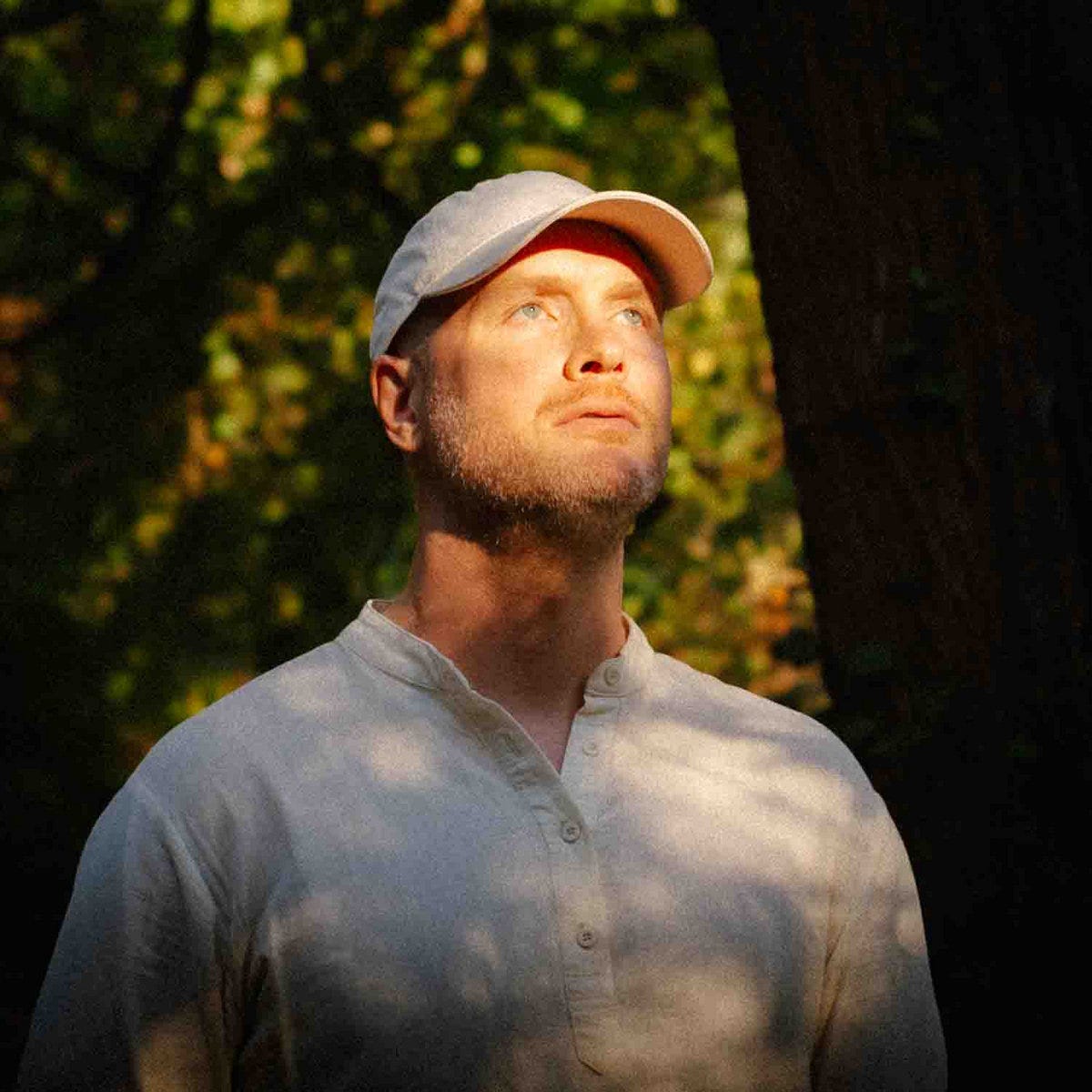
Today we’re listening to Christopher Willits, an American ambient musician from Kansas City, Mo. He grew up playing the piano and then the guitar, and was a member of psychedelic rock bands in high school. He attended Mills College in Oakland, where he studied with electronic music pioneer Pauline Oliveros. Since the early 2000s he’s focused on ambient music, releasing 17 LPs himself including collaborations with Flow State favorites like taylor deupree and Ryuichi Sakamoto. His latest album, New Moon, came out in October on Ghostly. It’s full of comforting chords and his textured Moog guitar, and was dedicated to Sakamoto. We’re also playing Willits’ 2012 collaboration with Sakamoto, Ancient Future, which blends synth pads with glitched piano and makes strategic use of silence. A conversation with Christopher follows the streaming links.
New Moon - Christopher Willits (36m, light vocals on track 9)
Spotify / Apple Music / YouTube Music / Amazon Music / Bandcamp / Tidal
Ancient Future - Christopher Willits & Ryuichi Sakamoto (32m, no vocals)
Spotify / Apple Music / YouTube Music / Amazon Music / Tidal
What’s your earliest memory of music?
My grandfather singing and playing piano! I also vividly remember my dad putting headphones on me to listen to Pink Floyd’s “On the Run” from Dark Side of The Moon and my head was so small that the headphones were on my cheeks. Completely blew my mind.
You started playing guitar as a teenager, reverse engineering solos by Hendrix. How did you get into more ambient/electronic music – what artists/albums?
I fell into ambient music through experimenting with guitar pedals, without knowing there was some history to it. Then an older friend who helped my band record a demo was like man you’re making things that remind me of Fripp and Eno’s Evening Star, you need to check it out. Discovering that music felt so validating to sounds I was hearing and creating.
I was exposed to electronic music like Morton Subotnick and Tangerine Dream through my parents’ record collection, then dance music through MTV and a radio show in KC-area called “Nocturnal Transmissions” by DJ Ray Velasquez. That paved the way for it to fully stick to me with Photek, LTJ Bukem, Roni Size and then Autechre, Aphex Twin, and all the early Warp releases.
You’ve been putting out records for over two decades. How would you say your compositional style changed over that time period?
When I compose I surrender to whatever the music wants to do, and however it wants to move through me. I feel over the years I can hear more subtly in that process. The harmonies become wider, the chord-melodies more clear. It’s a mysterious process for sure. I create the space to compose, the music emerges, creating the space to listen; the perception of the sound is creating it anew.
You’ve collaborated with some of our favorite artists. What are some collaboration moments from your career that stick out to you?
The first session I had with Sakamoto comes rushing to mind. It was the first time we had met in person and we improvised for hours, completely losing track of time. It was a moment of musical telepathy – no words purely talking through sound.
Another was the first Flossin album with Zach Hill and Kid606 in a tiny band rehearsal space all night. Andrew Skikne recorded that completely wild free jazz noise onslaught.
My solo albums always have some level of support and collaboration. If not directly with other musicians performing with me, almost always Ryan Kleeman is giving me some perspective on the mixes and masters.
What instruments/gear did you use to make New Moon?
The central instrument of my music is guitar, specifically my Moog guitar. With New Moon I added some synths and p-pass, my voice, along with vocal harmonies with Alison Jones, textures from field recordings I make, and shruti box on a track.
When I’m tracking I use Neve Shelfords and mix stems at the Overlap Studio with a Neve 8816, Neve MBP, Manley Massive Passive, Manley Slam, SSL EGs, Neve Tape Saturators, and a Tascam 1/2in and more Neve Shelfords. From there I’m spatializing stems with E4L (Envelop for Live) to make the binaural and multichannel mixes.
How do you discover new music these days? Any notable recent finds?
I find music very organically through friends, Envelop team members, and also other artists who reach out to me and Envelop. Molina and Clearcurse are a couple new finds for me that come to mind.
Name an underrated artist from the past 50 years.
Hariprasad Chaurasia.
What are you working on next?
There’s a lot growing right now! I’m always recording and composing new albums, and before I finalize those I’m completing a couple collaborations that have been cooking over the past couple years. I’m also working on new Envelop listening space ideas, new Envelop experiences, and some other big projects we have growing within the nonprofit. I’m working on some new film ideas that I’m really excited about, and the biggest thing I’m working on isn’t quite ready to reveal, but it brings everything I love into one space.