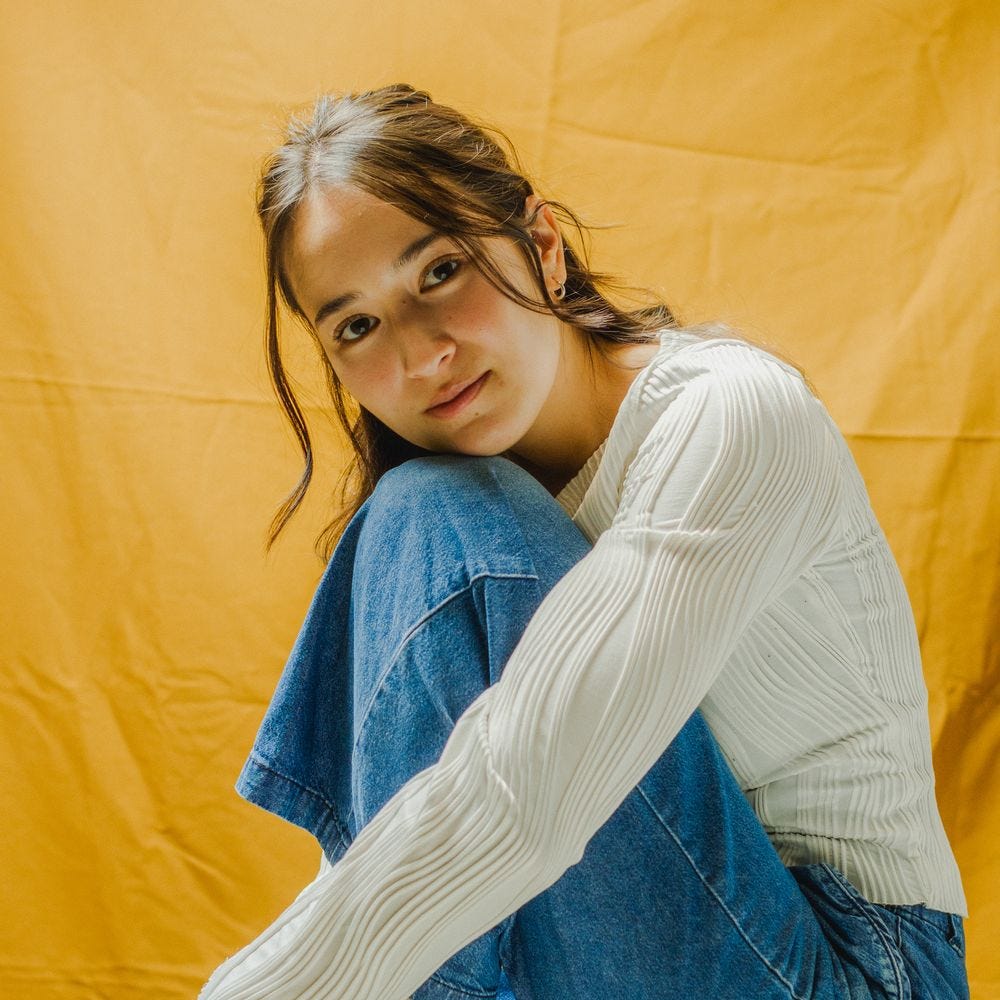
Today we’re listening to Catherine Tang, a Swiss pianist and composer based in Basel. She was born and raised there, beginning piano lessons at age four. She studied classical music and then got very into jazz in her late teens, eventually pursuing a bachelor’s and master’s in piano at Jazzcampus Basel. In November, she released her debut LP, Where Do You Dreams Fly? It’s seven original pieces led by acoustic piano, with atmospheric synths: “Osmose Expressive for its vocal-like responsiveness, the Prophet Rev2 for harmonic depth, the Nord for clarity, and the Moog Minitaur for a strong, tactile low end,” she told us. We’re also playing the album Nocturnal Journey by her band ASRA, a quintet she formed as an undergrad. A conversation with Catherine follows the streaming links.
Where Do Your Dreams Fly? - Catherine Tang (34m, no vocals)
Spotify / Apple Music / YouTube Music / Amazon Music / Bandcamp / Tidal
Nocturnal Journey - ASRA (44m, vocals on tracks 1 and 4)
Spotify / Apple Music / YouTube Music / Amazon Music / Bandcamp / Tidal
What’s your earliest memory of music?
My earliest memory of music is from long car rides to Serbia. We only had two CDs in the car: Michael Jackson’s Thriller and a Chopin piano album. I don’t even remember who played it, just the pieces themselves. I knew Thriller by heart. I would sing every arrangement, every detail, and my sister and I would split the voices between us. Looking back, it feels like that’s where my ear really formed, learning music by immersion, repetition, and sheer obsession.
Tell us how you started playing piano. What were your favorite pieces to play?
I was classically trained from a young age. Before I ever got into jazz, I gravitated toward music that completely broke my heart, honestly. I absolutely adored Brahms, and I was deeply drawn to the Impressionists, especially Debussy and Ravel. I was also obsessed with Liszt, for the intensity and the drama. That music shaped how I hear harmony and emotion at the piano long before I started improvising.
How were you initial drawn to jazz? What artists/records were your first favorites?
I got into jazz around 17, largely because my godfather dragged me to every jazz event he could find in Lausanne. At first it was just exposure, but very quickly it became a world I wanted to be inside of. Around that time, I also took my first jazz piano lessons there, which gave me a new relationship with the instrument.
The first record that truly changed everything for me was Kind Of Blue. Hearing that opened a completely new emotional space. I fell deeply in love with Bill Evans, his touch, his voicings, the way his playing felt both fragile and incredibly precise. There was so much silence, so much vulnerability in his sound. Coming from a classical background, it felt familiar in terms of harmonic depth, but radically different in its freedom.
Tell us about the formation of ASRA and the artists/records that inspired its sound.
ASRA came together during my bachelor’s studies, at a time when I was really opening up musically. I was hugely inspired by Ben Wendel back then, his sense of melody, the way his music feels both sophisticated and deeply human. The record High Heart in particular opened a whole new world for me and had a massive impact on how I was thinking about sound and form. I remember seeing the band live in Zurich, and on the drive there our saxophone player, Ruben, and I were singing along to every solo from the record by heart in the car. We knew it so deeply that it had almost become part of us.
In your solo work, you create atmospheric pieces centered around piano performance. What’s your process for composing these pieces?
I’m deeply driven by melody and atmosphere. Most ideas actually come to me through my voice first, I sing them before I ever play them. A lot of the process also comes from exchange: talking, playing, and reacting with other musicians, and from actually experiencing things in the world. I need that input for the music to feel real. At the piano, I’m very drawn to patterns, repetition, and texture, but I also like pushing things to extremes, emotionally and sonically. I try to stretch ideas until they almost break, and then pull them back.
What’s your studio setup like? What instruments/gear/software do you use?
For this project, I didn’t record at my own place, we recorded in Berlin. At the heart of it is the acoustic upright piano; that’s always my starting point and emotional center. I also used electronic instruments to expand the sound: the Osmose Expressive for its vocal-like responsiveness, the Prophet Rev2 for harmonic depth, the Nord for clarity, and the Moog Minitaur for a strong, tactile low end. After the recordings, my producer put everything through a lot of sound design, reverb, effects, layering. It helped the acoustic and electronic elements feel fully integrated. I like to say I’m really bad with software, so I leave that job to a professional! It lets me focus on playing and composing, while the studio magic happens elsewhere.
How do you discover new music these days? Any recent notable finds?
I discover most new music through friends, we’re always sending each other tracks and records. I also dig through Bandcamp and occasionally browse social media for inspiration. Recently, I’ve been listening to Laurie Torres, absolutely obsessed with Magdalena Bay, and really enjoying Peter Fox’s Love Songs. I’ve also been getting back into techno, like the new album from Efdemin. None of these are exactly “rare finds,” but they’ve all been really exciting to dive into lately.
Name an underrated artist from the past 50 years.
I’d say Big Red Machine. Seeing them live is honestly a dream of mine.
What are you working on next?
I’m bringing my live set to a new level with my producer in Berlin, really exploring how to make the performance bigger and more immersive. I’m also learning to DJ, haha, so expect some experiments and surprises along the way.