

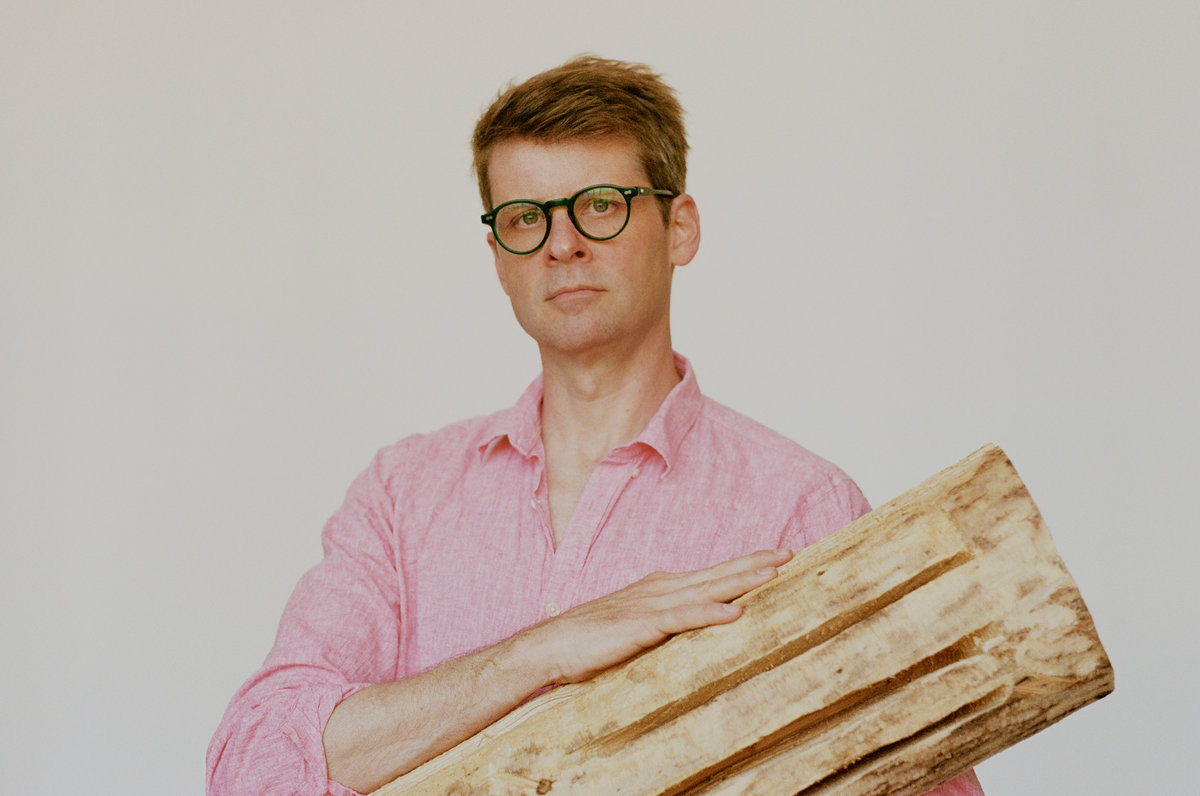
Today we’re listening to Blue Lake, an American multi-instrumentalist and composer based in Copenhagen. It’s the solo music project of Jason Dungan, who took the name from Don Cherry’s 1974 live album. Dungan grew up in Dallas and spent some time in Europe due to his father’s peripatetic geology job. As Blue Lake, Dungan plays a host of instruments (zither, acoustic guitar, cello, clarinet, pump organ, and more), recording American country and folk styles in nature-inspired freeforms. He played every instrument on his 2023 record, Sun Arcs, which was one of our favorites of that year. His new LP, The Animal, came out earlier this month and was recorded with a full band, partly inspired by his Sun Arcs tour. A conversation with Jason follows the streaming links.
The Animal - Blue Lake (46m, vocal tones on tracks 1 and 8)
Spotify / Apple Music / YouTube Music / Amazon Music / Bandcamp / Tidal
Sun Arcs - Blue Lake (41m, no vocals)
Spotify / Apple Music / YouTube Music / Amazon Music / Bandcamp / Tidal
What’s your earliest memory of music?
My earliest memories of music were related to my father, who is a music obsessive, and would always be playing records and making meticulously worked-out mixtapes for car trips. Growing up in Dallas, there’s lots of driving around through ribbons of highways and long, flat landscapes. I remember looking out of car windows and hearing David Crosby, Talking Heads, Pink Floyd, etc. while this banal yet weirdly fascinating landscape spooled past. That big LP collection on a long shelf definitely held a big fascination for me, even when I was too small to pick them up and play them.
What’s your personal history with musical instruments?
My history with instruments was twofold: The first was playing guitar, which meant having an acoustic guitar and taking lessons initially at a place called Zoo Music in Dallas, which was a big room filled with guitars, and long-haired guys trying to play Slash licks on big Marshall stacks. I took lessons with a great blues guitarist named Don who taught me about putting feeling into playing, and showed me things like how to play Hendrix solos.
After moving out of Dallas, I started making my own music, and really tried to explore lots of different approaches to playing, tuning, and generally tried to figure out my own language on the guitar, instead of learning standard approaches or other peoples’ songs. To this day, I can’t really play other peoples’ music, and I haven’t played in standard tuning for many years. I think from an early point, I wanted to find my own thing on the instrument, which I pursued through exploration and trying things on the instrument.
My only formal training came from a few years when I played cello in the school orchestra. This taught me a few things – one was that it sounded awesome to play together with a large group, and the other was that I wasn’t really cut out for playing classical music. But it did give me some basic understanding of music theory and reading sheet music, and I loved the feeling of playing the cello.
I think what I took from these two instruments in the long term was a love of acoustic instruments in general, and particularly string instruments. I like that string instruments are very flexible in how they’re played, and that you can even play them “wrong” and still get interesting sounds out of them. I bought a cello again a few years ago, after not playing for years, and starting using it on the early Blue Lake records.
Which artists or records most influenced your musical sound and sensibility?
The project is named after a Don Cherry album, so I’d definitely say he was huge. I got deep into his records for many years, and there was something about his approach, particularly on his ‘70s and ‘80s records, that kind of opened up my head to understanding how I could make my own music come together, after many years of experimenting with my solo music in a semi-private way. So I kind of regard Cherry as a sort of “teacher” figure, as there was a long period where I really looked up to his music as a guide.
I had a number of years where I was playing in a band in London called Squares and Triangles, made with friends who came from an arts background. We improvised a lot, and had many years where we would get together pretty regularly and record. We would switch instruments, and generally challenged each other quite a bit with unusual prompts / ideas / sounds. I learned a ton about group playing, about sound, and about recording. Playing with this group was kind of my real musical education. I wouldn’t be making solo music without it.
I listened to a lot of guitar-oriented music in the ‘90s (The Spinanes, Yo La Tengo, Pavement, The Breeders, Sonic Youth), and a lot of those bands were my first experiences of live music. This was my original ground-zero for getting deep into music, and I think the inventiveness and immediacy of those bands has affected me a lot, even though I’m pursuing my music through some different avenues in terms of sound.
Ellen Fullman’s approach to instrument-building, performance, and recording also made a big impact on me.
One idea that you’ve cited as inspiration for your music is that human beings are part of the natural environment and not separate from it. How does that idea make it into your compositions and recording process?
I think that when I’m making the records, there are definitely certain ideas, feelings, events, going on around me that seep into the feel of the music, and I’ve been thinking a lot about our relationship to nature and the human impact on the natural world. My wife has been doing activism in Copenhagen for a few years, trying to protect a nature space from development. This spot is very beautiful and is a site for birds and other animals to breed. The reason it’s been left as a natural space right in the middle of Copenhagen is that it was a toxic dump in the ‘60s and ‘70s, and was considered unusable for anything else. So there’s this strange relation between our mistreatment of natural spaces, which paradoxically can make it possible for nature to flourish, but would also maybe poison us if we decided to build a house on it. So I guess I’m thinking a lot about nature, and how its rhythms influence my ideas about music, but also that the beauty one experiences in nature is inextricable now with a sense of awareness (and anxiety) about how we’re changing the natural world. It has been normal for humans to see nature as something separate from us, something to be used, exploited, or treated as a beauty spot. In 2025, if I look at the ocean, it might be beautiful, but I’m also worried about agricultural pollution or what will happen in Denmark if the seas rise. It reintroduces this deep vulnerability towards nature that has mostly been the norm for humanity, and I think we’re starting to feel it again, after maybe a century or two of feeling dominant over our surroundings. Which is to say that in making the music, I’m engaged with the natural world in a way that reflects both its beauty and is also interested in the complicated realities of our present moment.
How has living in Copenhagen and in other parts of Europe influenced your music?
I think it’s really a double thing, where I have both been digging deep into the Nordic music scene as a listener and organizer, and also exploring American music, but at a distance. Before living in Copenhagen, I lived in London for many years, and was regularly at Cafe Oto and other venues, seeing jazz, experimental music, and various bands and players from around Europe. In Copenhagen, I’ve worked as an organizer, putting together residencies and concerts, and generally exploring the various overlapping scenes in the city. This has given me the opportunity to see a really wide range of music here, and just to see people working up close, which has been fascinating.
Copenhagen has a really vibrant scene, but it’s still a fairly small city - for an outsider it’s possible to kind of come in and start to understand things, and to piece together what’s happening. There’s a very open atmosphere in general, I think, and a lot of artist-run spaces and projects that contribute to a really fertile environment. A lot of people here are running their own spaces, and their own labels, so it definitely inspired me to self-release the first Blue Lake records. I think it also inspired me to really explore my own voice – I don’t really feel like there’s a dominant sound here in Copenhagen, it’s more a collection of overlapping scenes and sensibilities. And then I think my interest in American music was almost more clear to me from a distance. For example, I was listening to things like certain guitar players or pedal steel players, and there’s almost never any country music here in Denmark – so those sounds take on a different character here. Whereas in Texas you’d hear them all the time.
How do you discover new music these days? Any notable recent finds?
I have always read about music in various magazines or whatever I could find, so I’m kind of generally interested and always looking to find new things. I think during the pandemic I went deep on exploring various labels on Bandcamp and just trying to learn and explore new things. I go to record stores like Proton in Copenhagen, or World of Echo in London and Ergot Records in New York (when I get a chance). Record stores and shows are still the best places to find things, I think. I also have a couple of friends who have extensive record collections and I’ll just go to their place and look through their stacks.
Name an underrated artist from the past 50 years.
When I was in college in Vermont, I worked at the radio station there, called WRMC, and one of our favorite bands at that time (early 2000s) was a band from New York called The Mendoza Line. I saw them play loads of times and got them to play at the college festival we organized. A great, somewhat tempestuous live band, featuring three singer-songwriters, you could maybe compare them to things like Richard & Linda Thompson, The Replacements, or a less slick Fleetwood Mac. They made some really beautiful records, but were working in an era when a lot of the hip stuff in New York was more indebted to dancey post-punk. They’re not active anymore, but I think their music deserves a rediscovery, because the records are great.
What are you working on next?
At the moment, I’m writing and developing material for the next Blue Lake record. Still in early stages, but I’m thinking about some ways to build on what we did while making The Animal, and also looking at some new ideas to bring into the process. It’s early days but I’m excited about where it’s going.
I’ve also been working on some music as a collaborative duo with the Danish composer Johan Carøe, which looks like it should see the light next year.
These recordings are beautiful. They make me feel hopeful. If I could, I would dedicate the lovely "Flowers for David" to my cousin David, who left this earth far too soon.
The best of this kind of music transports the listener to a place. You can see, feel and smell the ambience. This music does that. Bravo!