

Today we’re listening to Aiko Takahashi, an ambient musician from Italy. They grew up in a small village near Gorizia, they told us, listening early on to Talking Heads, King Crimson, and Roxy Music. Eventually they found their way to Brian Eno and Messina/Lovisoni, which guided them toward ambient music. Monologue, their new LP, came out at the end of August on the label quiet details. It’s a series of gentle synth loops and felt piano blent with field recordings. It’s their second ambient LP in just a few months, following June’s The Glass Harp, a similar gorgeous concoction of environmental music. An interview with Aiko follows the streaming links.
Monologue - Aiko Takahashi (40m, no vocals)
Spotify / Apple Music / YouTube Music / Amazon Music / Bandcamp / Tidal
The Glass Harp - Aiko Takahashi (41m, no vocals)
Spotify / Apple Music / YouTube Music / Amazon Music / Bandcamp / Tidal
What’s your earliest memory of music?
It’s hard to say. Childhood memories are like a shuffled deck of cards, hard to put in order, their edges blurred. But I do remember finding some cassette tapes in my father’s drawer. One of them was Naked by Talking Heads. I had no idea what it was, or that one day tapes would become nostalgic artifacts. Today, Naked is one of my favorite albums, still underrated. Maybe that’s when something began to take root.
I also have many memories of car trips with my parents, my mother playing Sting, Annie Lennox. I think that’s where I learned to love the idea of listening to music while watching images pass quickly before my eyes. Even now, I love traveling by train or car just to watch the landscape shift and listen to music.
Where did you grow up?
I grew up in a small village in northeastern Italy, not far from Gorizia. I studied there, and eventually moved to the city, right on the border between Gorizia and Nova Gorica. I like to think of myself as an artist from “two cities in one,” a land made of fractures and continuity. The dual soul of this place, once divided, now joined, is deeply woven into my music. The region where I live is incredible, with a bit of everything when it comes to landscapes. It’s also far removed from the chatter and the intellectual and artsy scenes of big cities like Milan. A perfect place to make quiet music in quiet surroundings.
Which artists or albums drew you towards ambient music?
I arrived at ambient music indirectly, after a long detour. In my early days, I was immersed in the ’70s: Nick Drake, Nico, King Crimson, Roxy Music. Naturally, I found Brian Eno, but I didn’t see it as a “genre.” Years later, during university, I stumbled across Prati Bagnati del Monte Analogo, a gem of Italian minimalism. That album is a complete world: total art, from its concept to its sonic texture.
Eventually, artists like Machinefabriek and labels like Dauw, Home Normal, and Seil opened a new path for me. They taught me that ambient isn’t background but a room you enter.
There’s one thing that bothers me about the current ambient scene: I feel that even here, the specter of “embracing everyone” has arrived. There’s a strong pull toward what’s considered “exotic” or “different,” but I often notice it’s only about the outer layer, while the music itself sounds exactly like everyone else’s. Ironically, this ends up flattening the sonic spectrum rather than expanding it. I don’t see any major changes happening.
With my music, I try to break away from endless drones or purely random modular systems. I want to bring in a more compositional element. There are artists who understood this long before I did and are doing it beautifully: Alaskan Tapes, Ann Annie, Sontag Shogun, Eliot Krimsky.
What is your studio setup like? What instruments/gear did you use to create Grass Harp and Monologue?
I keep things very minimal, both by choice and necessity. Most of the time, I work on headphones, using just a laptop and a few trusted tools. For Monologue, I used a very reduced palette: felt piano, sine waves, bells, and field recordings. A few textures came from analog pedals (Strymon, Chase Bliss), and sometimes I bounce material onto cassette to roughen it up and give it warmth and imperfection.
I don’t believe gear makes the music. I’m not interested in the analog vs. digital debate, especially when the prices of equipment today are absurd. I’m sure many of my favorite albums were made with the bare minimum. I see a lot of artists using the same expensive gear and arriving at the same results.
How do you discover new music these days? Any notable recent finds?
Bandcamp is still where I find the most sincere voices. I also follow a few very careful listeners on Instagram, people who dig deep and share what they love without hype. Surprisingly, even Spotify can help, not through its algorithm, but through personal public playlists. Sometimes they reveal incredible connections.
And then there are labels. Some labels release music that’s almost always a sure thing for me, Dauw, for example, Erased Tapes or 12k that I really love. They’re very different from each other, but all are incredibly high quality.
As I mentioned earlier, lately I’ve been listening a lot to Paivakanhvit by Sontag Shogun and Lau Nau, a truly stunning record. For Violet by Ann Annie is another beautiful album I keep coming back to. I’ve also been revisiting slightly older works, like Saudade by R Beny, which I highly recommend to anyone who hasn’t heard it yet.
Name an underrated artist from the past 50 years.
Too many to name just one. Maybe the real question is why the system keeps rewarding what’s loudest. I often wonder what future generations will actually go back to listen to from what we’re leaving behind. It’s a question tied to a clearly commercial (and in some ways capitalist) logic. I’m not making an “anti-system” speech here; it’s simply how things are.
What are you working on next?
I’m working on a collaborative project with the Spanish artist David Cordero, an artist I deeply admire. Beyond that, I’m in a strange place. The ambient scene today feels very saturated, and it’s getting harder to find space unless you already belong. Many great labels have closed doors for obvious reasons, but it doesn’t make it easier for those who arrive late.
Self-releasing is an option, but it comes at a cost: emotional, practical, and economic. So for now, I make music quietly, for myself. And if someone finds something in it, if it resonates, even briefly, then that’s already more than enough.
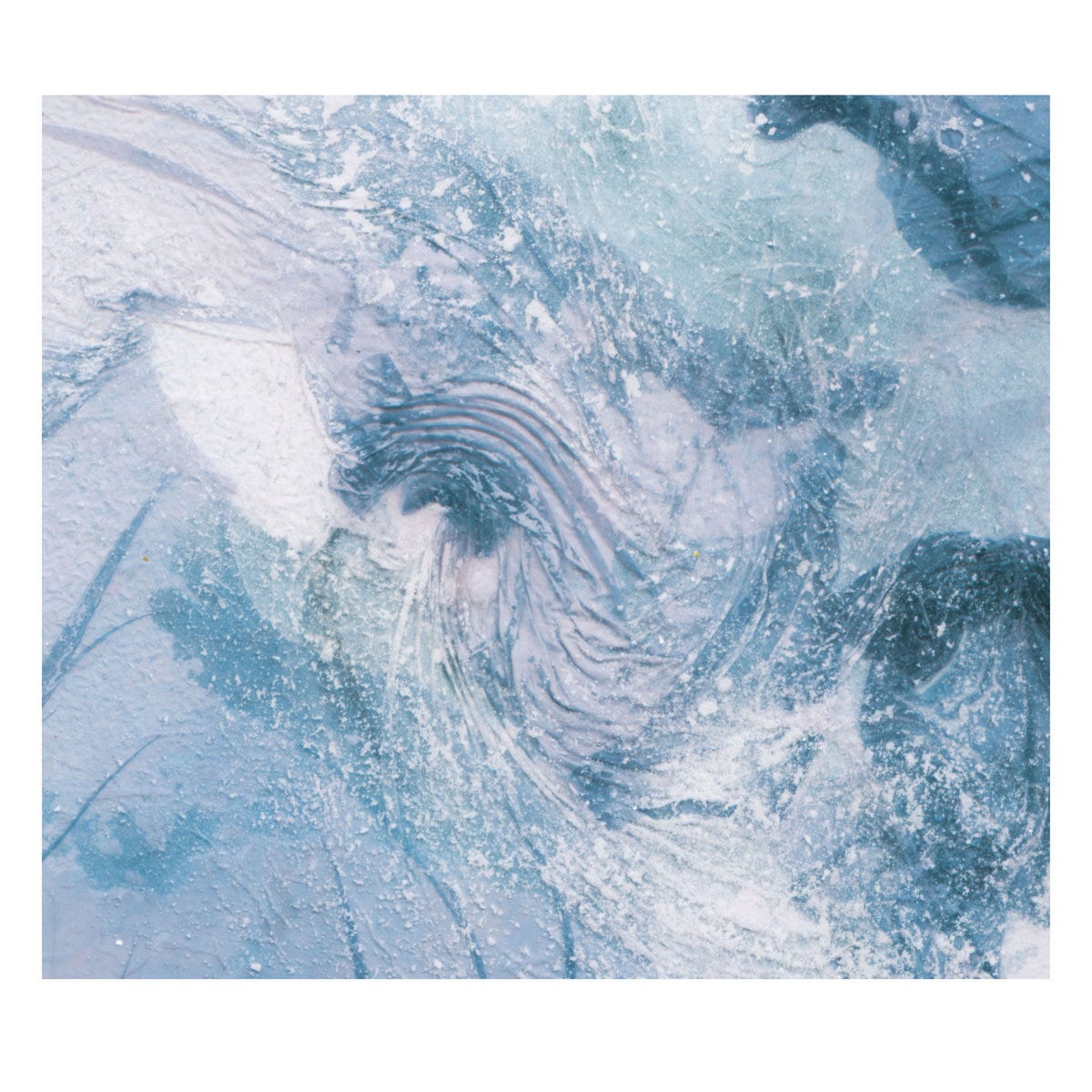
THIS: "ambient isn’t background but a room you enter"
lovely interview! thanks for including our album :)